
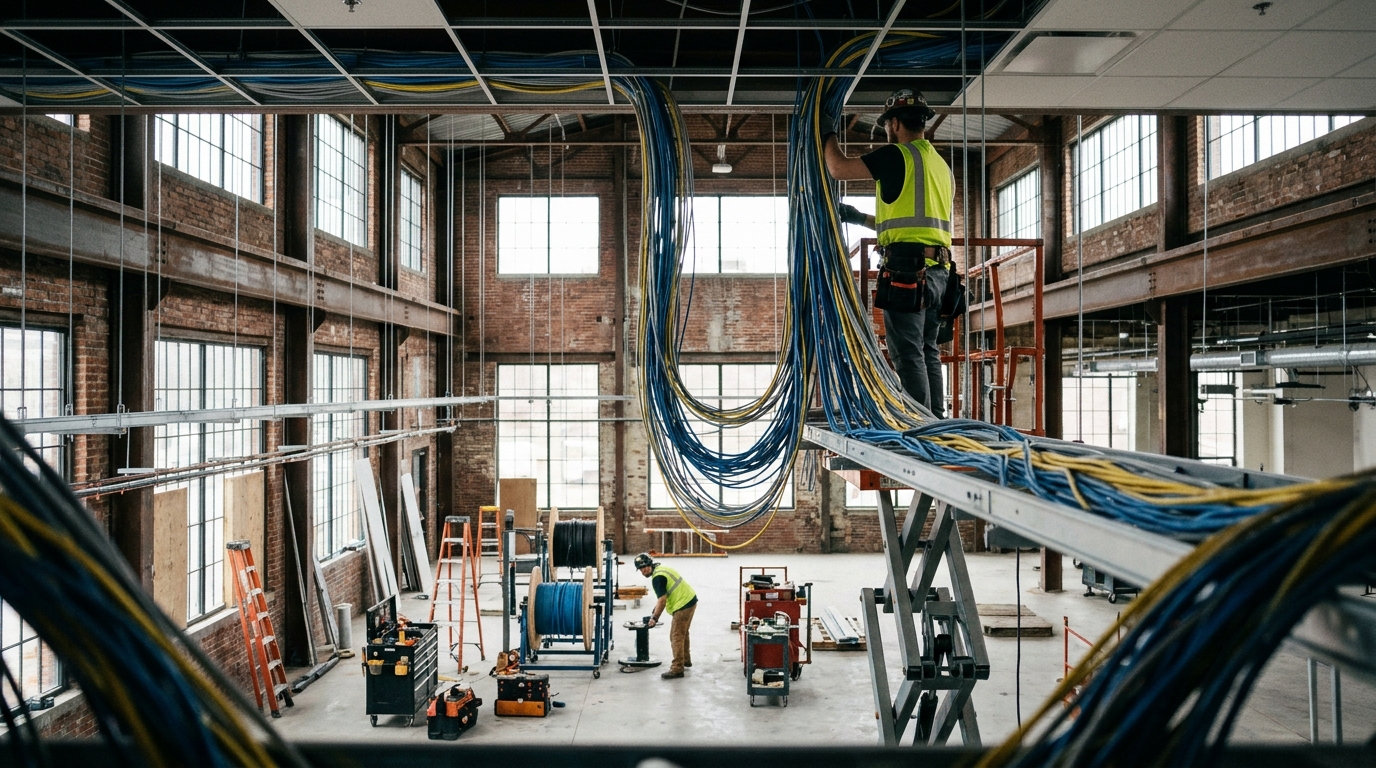
Copper vs. Fiber: The Primary Cost Driver
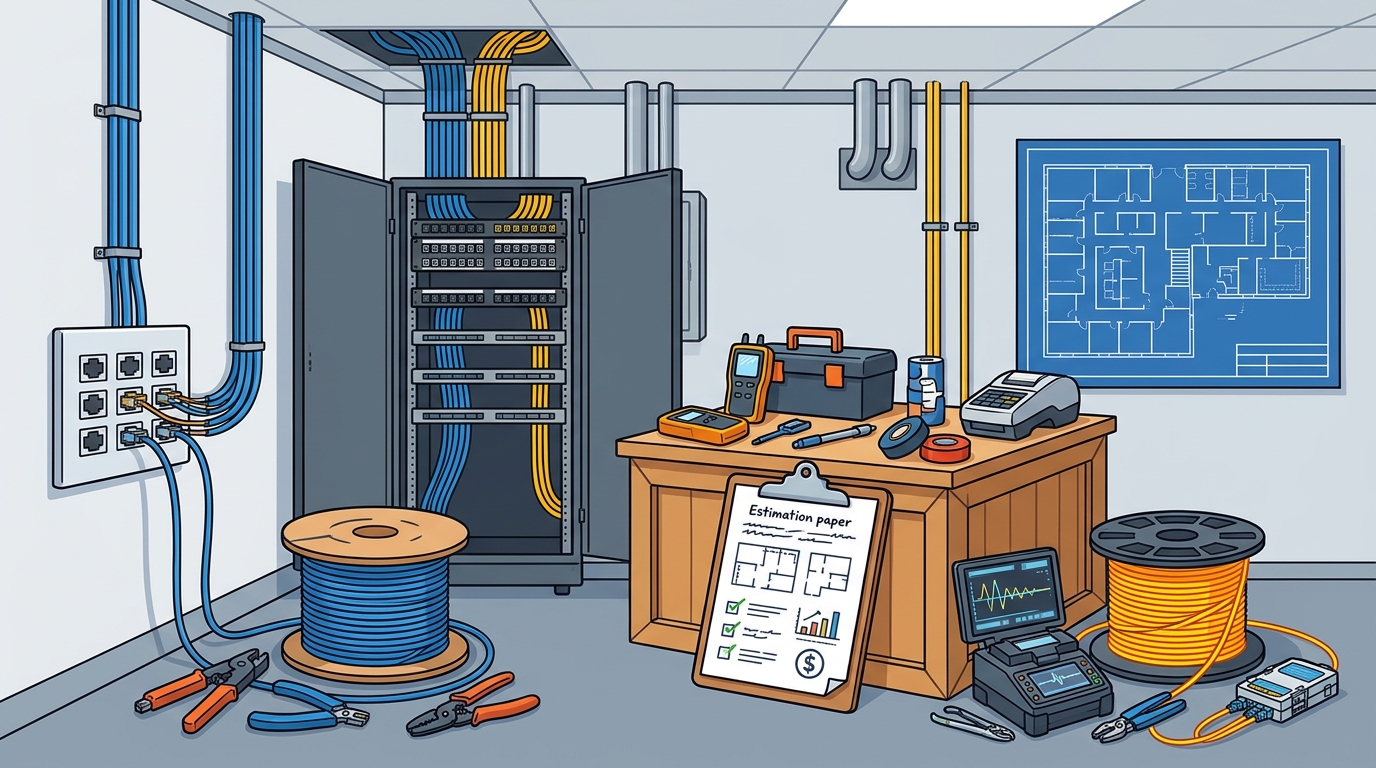
The type of cabling selected is the single largest factor in determining the cost per drop. Copper cabling is the standard for most office environments, offering a balance of speed and affordability. Fiber optic cabling is a high-performance solution used for backbone connections or high-bandwidth applications, but it requires specialized termination and testing.
Distance and Cable Pathing Complexity
The physical path the cable takes from the telecom room to the outlet is a major cost determinant. Cable pathing is the process of routing cables through a building's infrastructure, including risers, ceilings, and walls. Shorter, direct paths reduce labor time and material costs, while complex paths involving multiple floors or tight spaces increase them.
In older Framingham buildings, pathing can be particularly challenging due to limited conduit space or the need to drill through concrete. This complexity can add 20% to 40% to the base installation cost. Structured cabling professionals assess these variables during the site survey to provide accurate estimates. Understanding the layout of your building helps in predicting these costs more accurately.
Labor Rates and Certification Requirements
Labor is a significant portion of the total cost, and rates in the Framingham area reflect the high cost of living in the Boston metro region. Installation labor is the work performed by technicians to pull, terminate, and test cables. Certified technicians command higher rates but ensure compliance with industry standards and manufacturer warranties.
Most commercial projects require certification testing, which verifies that the cable meets performance standards. This testing is often included in the per-drop price but can be an additional line item in some quotes. The use of certified technicians, such as those with BICSI or AVIXA credentials, ensures that the installation is done correctly the first time, avoiding costly rework. Design workroom services often include these certifications, providing a higher level of assurance for critical infrastructure.
Volume Discounts and Project Scope
The total number of drops in a project significantly impacts the per-unit cost. Volume discounts are common in network cabling, where larger projects benefit from economies of scale. A project with 100 drops will typically have a lower per-drop cost than a project with 10 drops, due to reduced mobilization and demobilization overhead.
Additionally, the scope of the project matters. A new construction project allows for easier cable pathing compared to a renovation of an occupied office. Renovations often require working around existing equipment and minimizing disruption, which can increase labor costs. Project build services are designed to manage these complexities, ensuring that the installation is completed efficiently and with minimal impact on your daily operations.
Key Takeaways
- Cable pathing complexity, especially in older buildings, can increase costs by 20% to 40%.
- Labor rates in the Boston metro area are higher than national averages, reflecting local market conditions.
- Volume discounts apply to larger projects, reducing the per-drop cost.
- Certification testing is a critical component of the installation process and should be included in the quote.
- Renovations of occupied spaces may incur higher labor costs due to the need for minimal disruption.
Frequently Asked Questions
What is the average cost of a network drop in Framingham?
Does the age of the building affect the cost?
Yes, older buildings often have more complex cable pathing requirements, which can increase installation costs by 20% to 40% due to the need for additional drilling or conduit work.
Is certification testing included in the price?
Most reputable integrators include certification testing in the per-drop price, but it is always best to confirm this in the quote. Certification ensures the cable meets performance standards and maintains manufacturer warranties.
How do volume discounts work?
Volume discounts reduce the per-drop cost for larger projects. A project with 100 drops will have a lower per-unit cost than a project with 10 drops, due to reduced overhead and mobilization costs.
What is the difference between copper and fiber drops?
Copper drops are standard for end-user connections and are more affordable. Fiber drops are used for high-bandwidth applications and backbone connections, offering higher performance but at a higher cost.
How long does it take to install a network drop?
Installation time varies based on pathing complexity. A simple drop in a new construction project might take 30 minutes, while a complex drop in an older building could take several hours.
Conclusion
Understanding the factors that influence network drop installation costs is essential for accurate budgeting in Framingham. By considering cable type, pathing complexity, labor rates, and project volume, you can make informed decisions that balance performance and cost. To plan your visit, contact our team for a detailed site survey and customized quote tailored to your specific facility needs.