
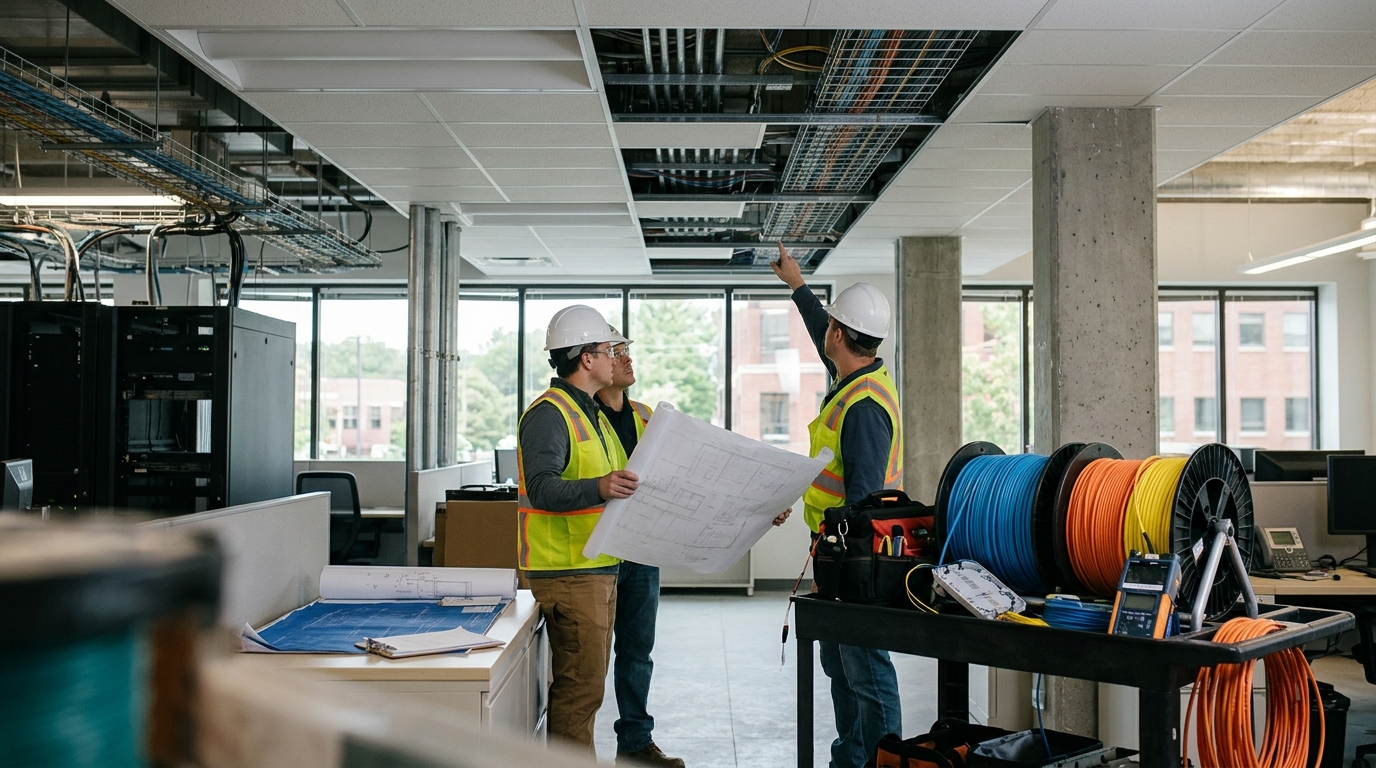
Before installing fiber optic cabling in a Framingham office, you must verify existing infrastructure, define bandwidth requirements, and ensure physical space for termination hardware. Superior Communication Services advises that proper planning prevents costly rework and ensures long-term scalability. This guide outlines the critical technical and logistical factors your team should address before construction begins.
Assessing Existing Infrastructure and Bandwidth Needs
Bandwidth requirements must be defined with a five to ten-year horizon. A single 10-gigabit connection today may require multiple strands to support future 40-gigabit or 100-gigabit applications. By calculating the total data load for video conferencing, cloud backups, and IoT devices, you can select the appropriate fiber count. This forward-looking approach ensures that your investment remains viable as technology evolves, avoiding the need for premature replacement.
Physical Space and Termination Hardware Requirements
Termination hardware is the equipment used to connect fiber optic cables to network devices and patch panels. Unlike copper cabling, fiber requires specific termination points that consume significant vertical space in telecom rooms. You must verify that your existing racks have sufficient room for fiber patch panels, splice trays, and management hardware. In many Framingham offices, telecom rooms are already at capacity, requiring additional rack space or the installation of new cabinets. Superior Communication Services designs these layouts to ensure proper airflow and cable management, preventing signal degradation caused by tight bends or poor organization.
Environmental controls are also critical for fiber performance. Fiber optic cables are sensitive to extreme temperatures and humidity, which can affect the integrity of the glass core. Your telecom room must maintain a stable climate, ideally between 64 and 86 degrees Fahrenheit. If your current space lacks adequate cooling, you may need to upgrade your HVAC system before installation. This step ensures that the fiber infrastructure operates reliably under all conditions, protecting your data transmission quality.
Compliance with Building Codes and Fire Safety Standards
Building codes are local regulations that dictate how electrical and data systems must be installed to ensure safety. In Massachusetts, the state building code requires specific fire ratings for cables passing through fire-rated walls and floors. Fiber optic cables must be rated for the environment in which they are installed, such as plenum-rated for air handling spaces or riser-rated for vertical shafts. Ignoring these requirements can result in failed inspections and costly remediation work. Superior Communication Services ensures that all fiber installations comply with local and state codes, providing documentation that satisfies building officials and insurance providers.
Fire safety standards also dictate the use of specific firestop materials when cables penetrate fire barriers. These materials prevent the spread of fire and smoke between floors, maintaining the integrity of the building’s safety systems. Proper installation of firestops is a legal requirement in most commercial buildings. By addressing these compliance issues during the planning phase, you avoid delays and ensure that your fiber network meets all regulatory standards. This proactive approach protects your organization from liability and ensures a safe working environment for all employees.
Choosing the Right Fiber Type and Connector Standards
Fiber type is the classification of the glass core that determines the distance and speed of data transmission. The two primary types are single-mode and multi-mode fiber. Single-mode fiber uses a smaller core and is designed for long-distance, high-speed transmission, making it ideal for connecting multiple office locations. Multi-mode fiber has a larger core and is better suited for shorter distances within a single building. Superior Communication Services helps you select the appropriate fiber type based on your specific network architecture and future expansion plans. This decision impacts both the cost of the installation and the performance of your network.
Planning for Future Scalability and Maintenance
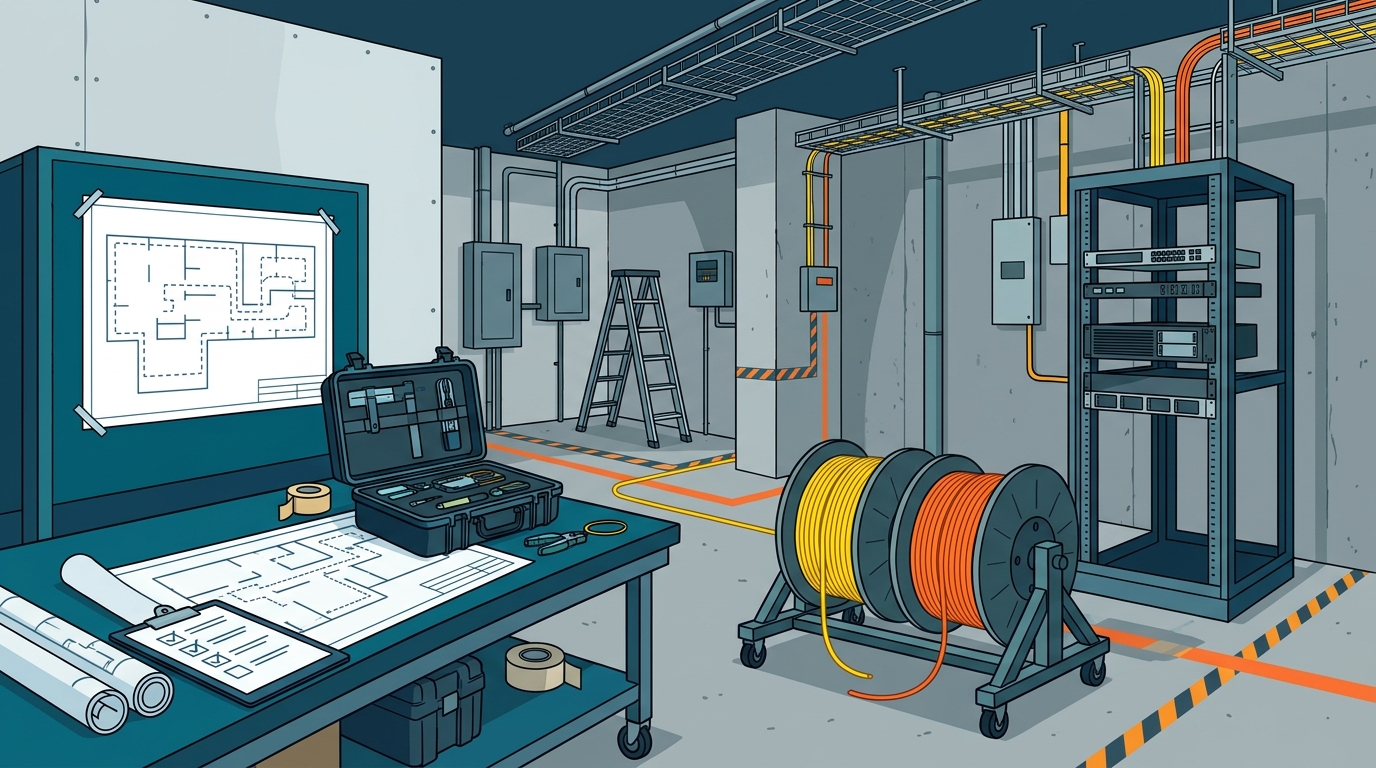
Scalability is the ability of a network to expand without significant disruption or additional cost. When planning your fiber installation, you should reserve extra space in your racks and conduits for future growth. This buffer allows you to add new cables or upgrade to higher-speed technologies without tearing out existing infrastructure. Superior Communication Services designs fiber networks with scalability in mind, ensuring that your investment can grow with your business. This approach protects your long-term value and reduces the total cost of ownership over time.
Maintenance access is another critical consideration. Fiber optic cables are fragile and can be damaged if bent beyond their minimum bend radius. You must ensure that your cable paths allow for easy access and inspection, enabling technicians to troubleshoot issues without damaging the cables. Regular maintenance and testing are essential to ensure the long-term reliability of your fiber network. By planning for maintenance during the initial design phase, you ensure that your network remains operational and efficient for years to come.
Key Takeaways
- Verify existing infrastructure and conduit paths to prevent physical bottlenecks.
- Define bandwidth requirements with a five to ten-year growth horizon.
- Ensure sufficient space and climate control in telecom rooms for termination hardware.
- Comply with local building codes and fire safety standards for cable ratings.
- Select the appropriate fiber type and connector standards for your network architecture.
- Plan for future scalability by reserving extra space in racks and conduits.
- Design for easy maintenance access to protect cable integrity and simplify troubleshooting.
Frequently Asked Questions
How much space does fiber optic cabling require in a telecom room?
Fiber optic cabling requires more vertical space than copper cabling due to the need for patch panels and splice trays. A typical 24-port fiber patch panel requires about one rack unit, while splice trays can consume additional space. You should plan for at least 20% more space than your current copper infrastructure to accommodate future growth and proper cable management.
What is the difference between single-mode and multi-mode fiber?
Single-mode fiber uses a smaller core and is designed for long-distance, high-speed transmission, while multi-mode fiber has a larger core and is better suited for shorter distances within a single building. Single-mode fiber is typically used for connecting multiple locations, while multi-mode fiber is used for intra-building connections. The choice depends on your specific network architecture and distance requirements.
Do I need to upgrade my HVAC system for fiber optic cabling?
You may need to upgrade your HVAC system if your telecom room does not maintain a stable temperature between 64 and 86 degrees Fahrenheit. Fiber optic cables are sensitive to extreme temperatures and humidity, which can affect their performance. Ensure that your telecom room has adequate cooling and humidity control to protect your fiber infrastructure.
What are the fire safety requirements for fiber optic cabling in Massachusetts?
In Massachusetts, fiber optic cables must be rated for the environment in which they are installed, such as plenum-rated for air handling spaces or riser-rated for vertical shafts. You must also use specific firestop materials when cables penetrate fire-rated walls and floors. These requirements are mandated by state building codes to ensure safety and prevent the spread of fire and smoke.
How long does it take to install fiber optic cabling in an office?
The installation time depends on the size and complexity of the project. A small office with a few fiber runs may take one to two days, while a larger multi-story building may take several weeks. Superior Communication Services provides detailed project timelines during the planning phase, ensuring that you can coordinate with other trades and minimize disruption to your business operations.
Can I install fiber optic cabling myself?
While it is technically possible to install fiber optic cabling yourself, it is not recommended for most organizations. Fiber installation requires specialized tools and training to ensure proper termination and testing. Errors in installation can lead to signal loss and network downtime. It is best to hire a certified integrator like Superior Communication Services to ensure that your fiber network is installed correctly and meets all industry standards.
Start Your Fiber Project with Superior
Superior Communication Services is a full-service technology integrator headquartered in Framingham, Massachusetts, with regional offices across the United States. Our team of certified engineers and technicians designs and installs scalable fiber optic solutions tailored to your specific business needs. To plan your fiber optic installation, contact our team for a comprehensive site survey and consultation.