
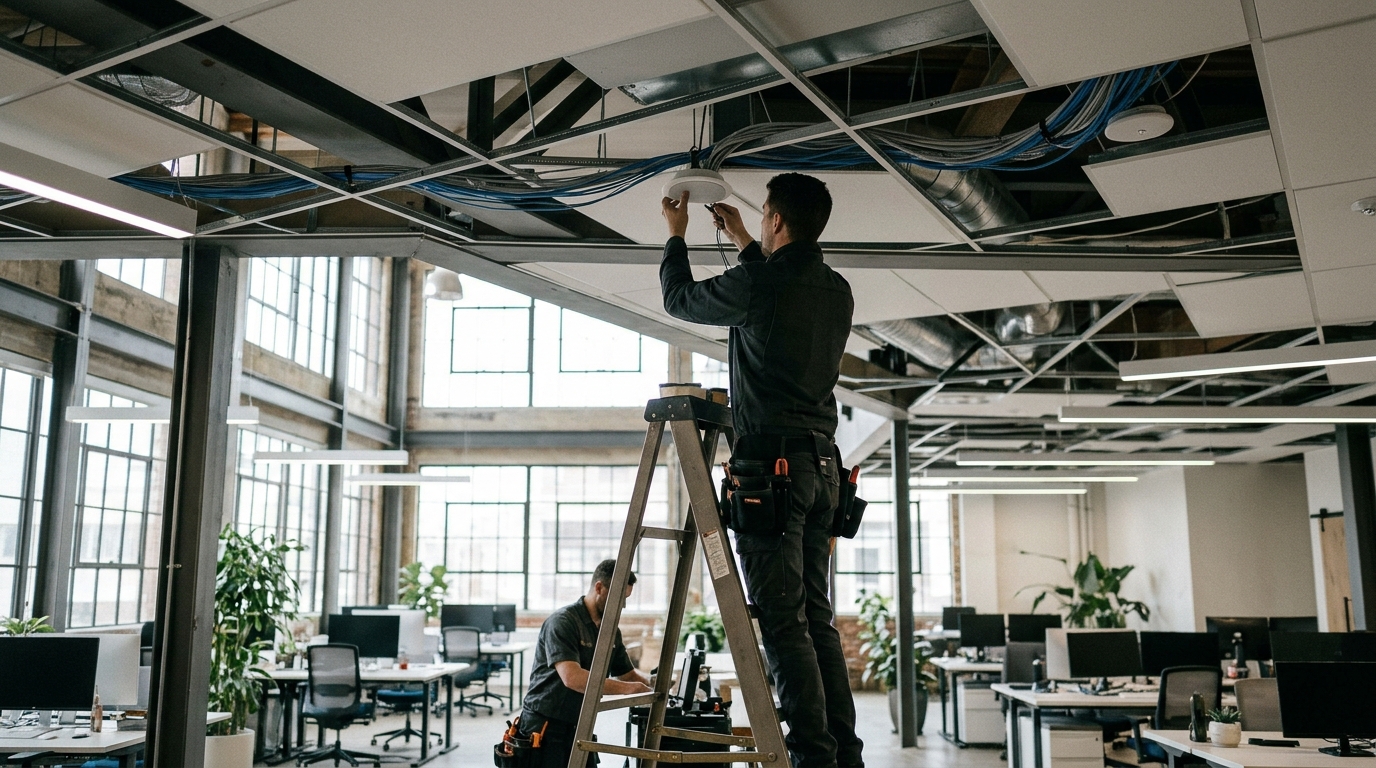
Before installing sound masking in an open plan office, you must evaluate your ceiling infrastructure, acoustic environment, and employee privacy needs. Sound masking is the process of introducing unstructured sound into an environment with the purpose of rendering human speech less intelligible. This technology reduces the distraction of nearby conversations, allowing employees to focus. Superior Communication Services designs these systems to fit your specific space, ensuring the solution improves privacy and concentration without creating a new noise problem.
Understanding the Acoustic Environment
Effective sound masking requires a baseline understanding of your current noise levels. Open plan offices are environments where multiple workstations share a common space without physical barriers. In these settings, speech is the primary source of distraction. Before any hardware is installed, an acoustical engineer must perform a site survey. This involves measuring the ambient noise floor and identifying the primary sources of distraction. If the background noise is already too high, masking may not be effective. If it is too low, the masking system might be perceived as a new annoyance. The goal is to find the optimal balance where speech is masked but the overall environment remains comfortable.
Choosing the Right Speaker Configuration
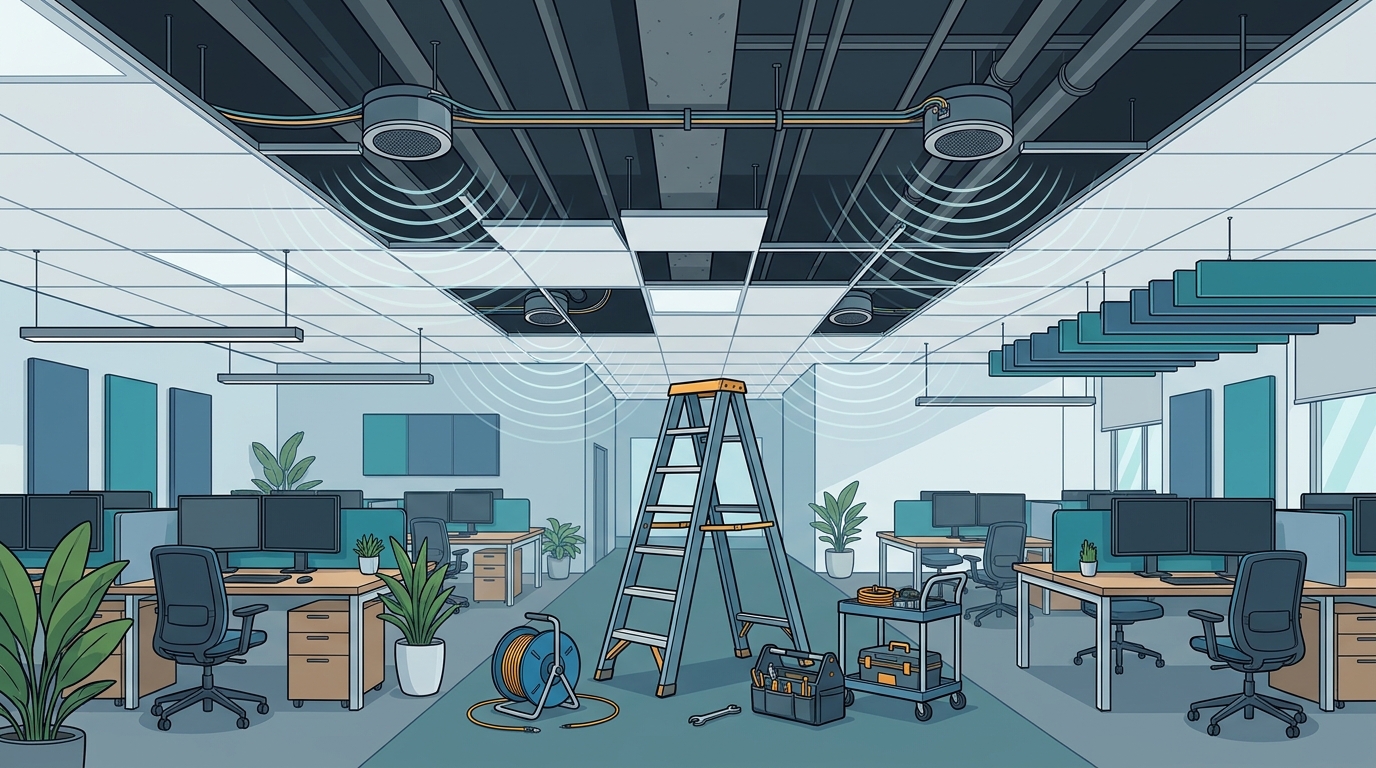
The physical installation of sound masking depends heavily on your ceiling type. Speaker emitters are devices that broadcast the masking sound evenly across a designated area. In drop ceiling environments, speakers can be installed directly into the ceiling tiles or above the ceiling grid. In open ceiling environments, speakers are often flush-mounted or suspended from stringers. The choice between these methods affects both aesthetics and sound distribution. Superior’s engineers analyze your ceiling structure to determine the best placement. They ensure that the sound is distributed uniformly, avoiding hot spots where the noise is too loud and cold spots where it is too quiet. This uniformity is critical for a successful installation.
Networked Systems and Control
Modern sound masking systems are rarely standalone units. Networked sound masking is a system where multiple speakers are controlled by a central server or controller. This allows for precise control over the volume and timing of the masking sound. You can schedule the system to run only during business hours, reducing energy consumption and noise exposure during off-hours. Networked systems also allow for zoning, where different areas of the office can have different masking levels. For example, a quiet zone near a conference room might have a lower masking level than a busy open plan area. This flexibility is essential for creating a comfortable workplace. Superior designs these networked systems to integrate seamlessly with your existing IT infrastructure.
Employee Acceptance and Training
Technology is only as good as its user adoption. Sound masking can be controversial if employees are not prepared for the change. Employee acceptance is the willingness of staff to use and tolerate a new workplace technology. Before installation, it is important to communicate the benefits of sound masking to your team. Explain how it will improve their focus and privacy. Provide a period of adjustment where the system can be fine-tuned based on feedback. Superior provides training for your team on how to operate the system. This includes how to adjust the volume, how to schedule the system, and how to troubleshoot basic issues. By involving your employees in the process, you increase the likelihood of a positive outcome.
Long-Term Maintenance and Support
Sound masking is not a set-and-forget solution. It requires ongoing maintenance to ensure peak performance. Maintenance is the process of inspecting, cleaning, and repairing equipment to keep it functioning correctly. Speakers can accumulate dust, which can affect their sound quality. Controllers can fail, which can disrupt the entire system. A proactive maintenance plan is essential to avoid unexpected downtime. Superior offers full maintenance programs and is available to assist with any service work necessary. This ensures that your sound masking system continues to provide the benefits you expect. Regular inspections can also identify potential issues before they become major problems, saving you time and money in the long run.
Key Takeaways
- Sound masking is the process of introducing unstructured sound to make speech less intelligible.
- Open plan offices are environments where multiple workstations share a common space without physical barriers.
- Speaker emitters are devices that broadcast the masking sound evenly across a designated area.
- Networked sound masking is a system where multiple speakers are controlled by a central server or controller.
- Employee acceptance is the willingness of staff to use and tolerate a new workplace technology.
- Maintenance is the process of inspecting, cleaning, and repairing equipment to keep it functioning correctly.
- Superior Communication Services provides design, installation, and maintenance for sound masking systems.
Frequently Asked Questions
What is the primary benefit of sound masking in an open office?
The primary benefit is improved privacy and concentration. By masking nearby speech, sound masking reduces the distraction of conversations, allowing employees to focus on their tasks. This can lead to increased productivity and job satisfaction.
Can sound masking be installed in any type of ceiling?
Yes, sound masking can be installed in both drop ceiling and open ceiling environments. The specific installation method depends on the ceiling type and the desired aesthetic. Superior’s engineers will recommend the best configuration for your space.
How loud should the sound masking be?
The sound masking should be loud enough to mask nearby speech but not so loud that it becomes a distraction in itself. The optimal level depends on the ambient noise in your office. Superior’s engineers will calibrate the system to the correct level for your environment.
Do I need to turn off the sound masking at night?
It is recommended to turn off the sound masking when the office is empty. This reduces energy consumption and avoids unnecessary noise. Most networked sound masking systems can be scheduled to turn on and off automatically.
How long does it take to install a sound masking system?
The installation time depends on the size of your office and the complexity of the system. A small office might take a day or two, while a large multi-story building could take several weeks. Superior provides a detailed project timeline during the design phase.
Is sound masking a one-time cost?
No, sound masking is an ongoing investment. You will need to pay for the initial installation, as well as ongoing maintenance and support. Superior offers maintenance programs to ensure your system continues to perform well.
Conclusion
Installing sound masking in an open plan office is a significant decision that can have a major impact on your employees’ productivity and well-being. By understanding the acoustic environment, choosing the right speaker configuration, and planning for long-term maintenance, you can ensure a successful installation. Superior Communication Services has the expertise to design and install a sound masking system that fits your specific needs. To plan your visit, contact our team to learn more about how we can help you create a more focused and productive workplace. Learn more: Contact Us Superior Communication.