

Before installing structured cabling in a Framingham office, you must verify existing infrastructure, define bandwidth requirements, and ensure compliance with local building codes. Structured cabling is a standardized system of telecommunications cabling that provides a flexible framework for network connectivity. Superior Communication Services, headquartered in Framingham, MA, designs these systems to support future growth and seamless communication. Proper planning prevents costly rework and ensures your network infrastructure remains scalable for years to come.
Assessing Your Current Infrastructure
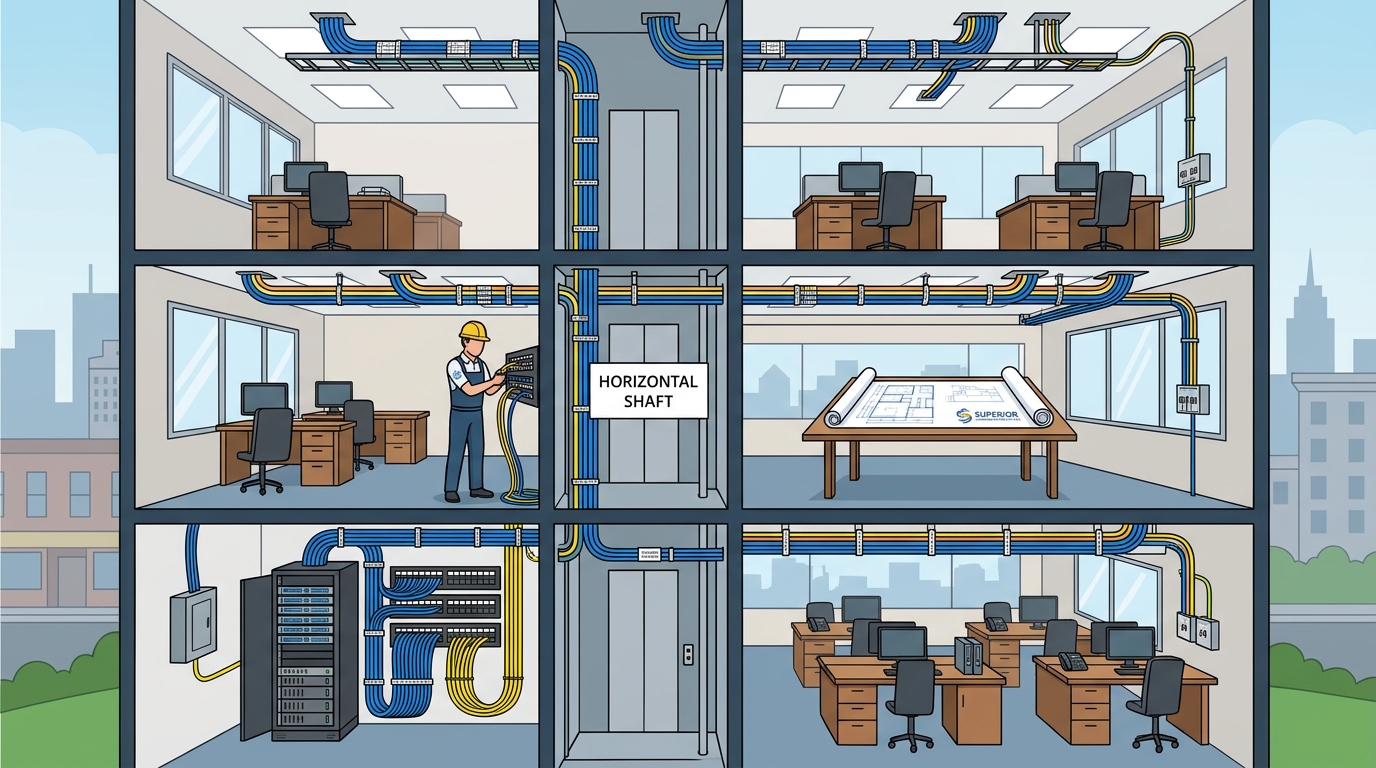
The first step in any cabling project is a thorough site assessment. You need to determine if existing copper or fiber optic lines meet current performance standards. Site analysis is the process of reviewing floor plans and physical conditions to identify potential obstacles. Our engineers conduct detailed walk-throughs to map out cable paths and identify where new drops are needed. This phase ensures that the design aligns with your actual workspace layout rather than theoretical assumptions.
For example, a recent project in the Framingham area required a complete audit of a legacy copper network. The assessment revealed that 30% of the existing drops failed certification tests. By identifying these failures early, the project team could plan for targeted replacements rather than a full rip-and-replace, saving the client significant time and budget. This level of detail is critical for maintaining business continuity during the transition.
Defining Bandwidth and Future-Proofing
Navigating Local Codes and Standards
Compliance with industry standards and local regulations is non-negotiable for a successful installation. Industry standards are the set of guidelines, such as TIA-568, that dictate how cabling systems should be designed and installed. In Massachusetts, local building codes may also impose specific requirements for fire ratings and conduit usage. Ignoring these rules can lead to failed inspections and costly remediation.
Our designers hold BICSI RCDD certifications, ensuring that every plan meets national and local codes. A concrete example of this importance is the requirement for proper separation between power and data cables. In one Framingham office renovation, the initial design placed data cables too close to HVAC ducts, which could have caused thermal degradation. Our engineers adjusted the routing to maintain safe distances, ensuring the system passed final certification without issues.
Minimizing Workplace Disruption
Installing cabling in an active office environment requires careful scheduling and execution. Project deployment is the phase where physical installation occurs, and it must be coordinated to minimize impact on daily operations. Noise, dust, and blocked pathways are common concerns for employees. A professional integrator will schedule heavy work during off-hours or weekends and use dust containment systems to keep the workspace clean.
Effective communication is key to a smooth process. We assign a dedicated project manager who serves as the single point of contact for your team. This person coordinates with facility managers and IT staff to ensure that work zones are clear and that critical systems remain online. For example, during a multi-floor rollout, we used a phased approach that allowed each department to continue working while their specific area was being upgraded. This strategy reduced downtime to near zero for the majority of the staff.
Choosing the Right Integration Partner
Selecting a partner with local expertise and national reach provides the best of both worlds. Technology integration is the process of combining hardware and software components into a cohesive system. A local partner understands the specific challenges of the Framingham market, from older building stock to local permitting processes. However, if you have multiple locations, a partner with national capabilities can ensure consistency across all sites.
Key Takeaways
- Conduct a thorough site assessment to identify existing infrastructure issues before starting work.
- Select cabling categories that meet current bandwidth needs and support future technologies like Wi-Fi 7.
- Ensure compliance with TIA-568 standards and local Massachusetts building codes to avoid inspection failures.
- Minimize workplace disruption through careful scheduling, dust control, and clear communication.
- Choose a partner with both local expertise in Framingham and national capabilities for multi-site consistency.
- Verify that your contractor holds relevant certifications, such as BICSI RCDD, to ensure design quality.
Frequently Asked Questions
How long does a structured cabling installation take?
The duration depends on the size of the office and the complexity of the design. A small office might take a few days, while a multi-floor commercial building could take several weeks. Our project managers provide a detailed timeline during the proposal phase.
Do I need to replace all my existing cables?
Not necessarily. If your existing cables are in good condition and meet current standards, they can often be reused. A site assessment will determine which drops need replacement and which can remain.
What is the difference between copper and fiber optic cabling?
Copper cabling is typically used for end-user connections, while fiber optic cabling is used for backbone connections due to its higher speed and longer distance capabilities. Both are essential components of a modern structured cabling system.
Can you work around our business hours?
Yes, we frequently schedule installation work during nights and weekends to minimize disruption to your employees. We will coordinate with your team to find the best times for each phase of the project.
Who is responsible for testing the new cabling?
The installation contractor is responsible for testing and certifying all new cabling. We provide a full test report package that documents the performance of every drop, ensuring compliance with industry standards.
Do you offer maintenance services after installation?
Yes, we offer full maintenance programs and are available 24/7 for service work. This ensures that your network infrastructure remains reliable and performs at peak levels long after the initial installation is complete.
Next Steps for Your Framingham Office
Investing in structured cabling is a strategic decision that impacts your entire organization's productivity and security. By understanding the key factors of assessment, bandwidth, compliance, and disruption, you can make informed choices that protect your investment. Superior Communication Services is ready to help you navigate this process with expertise and care. Our team is committed to delivering a solution that fits your vision and supports your long-term goals.
To plan your visit, to schedule a site assessment. We will work with you to design a cabling solution that is secure, scalable, and built for the future.