
Cat6 and Cat6A Drop Pricing
Copper Drop Installation Costs
Volume and Complexity Adjustments
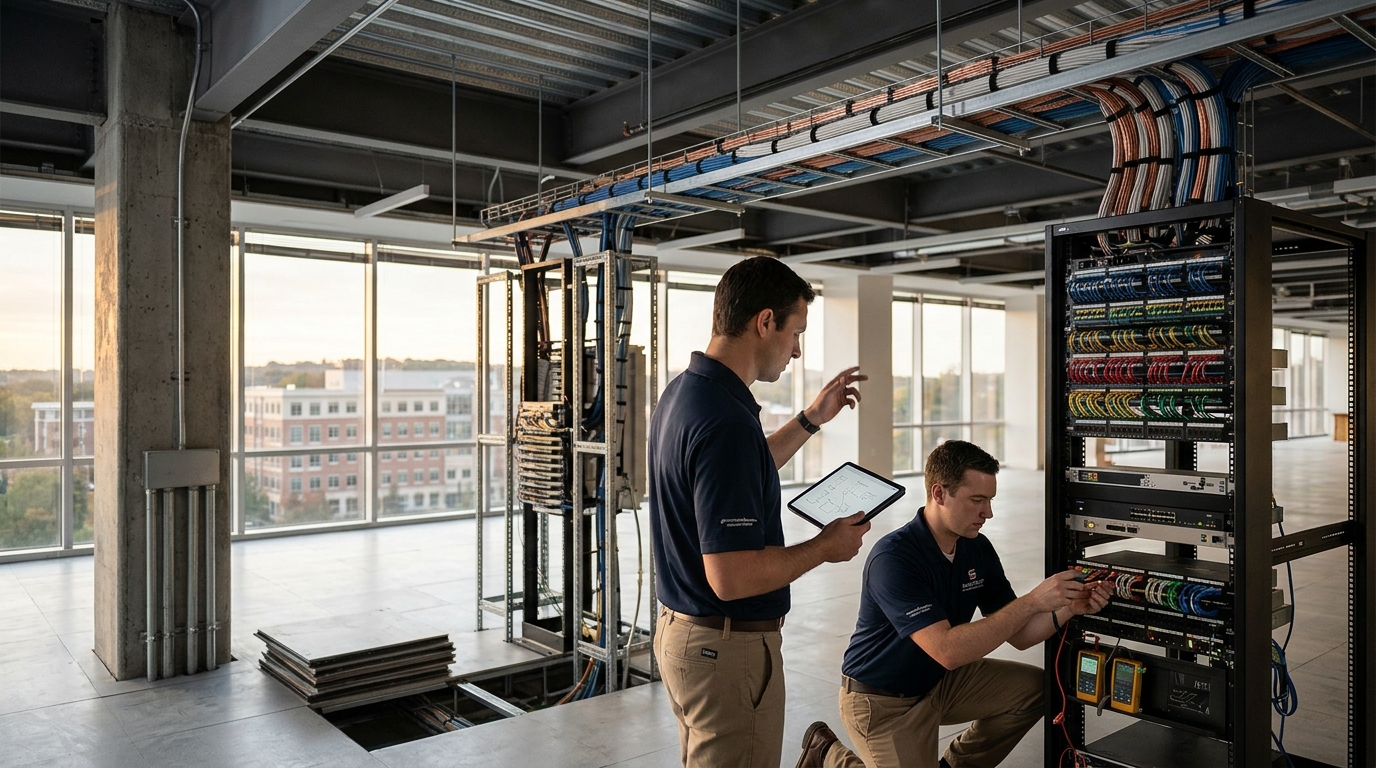
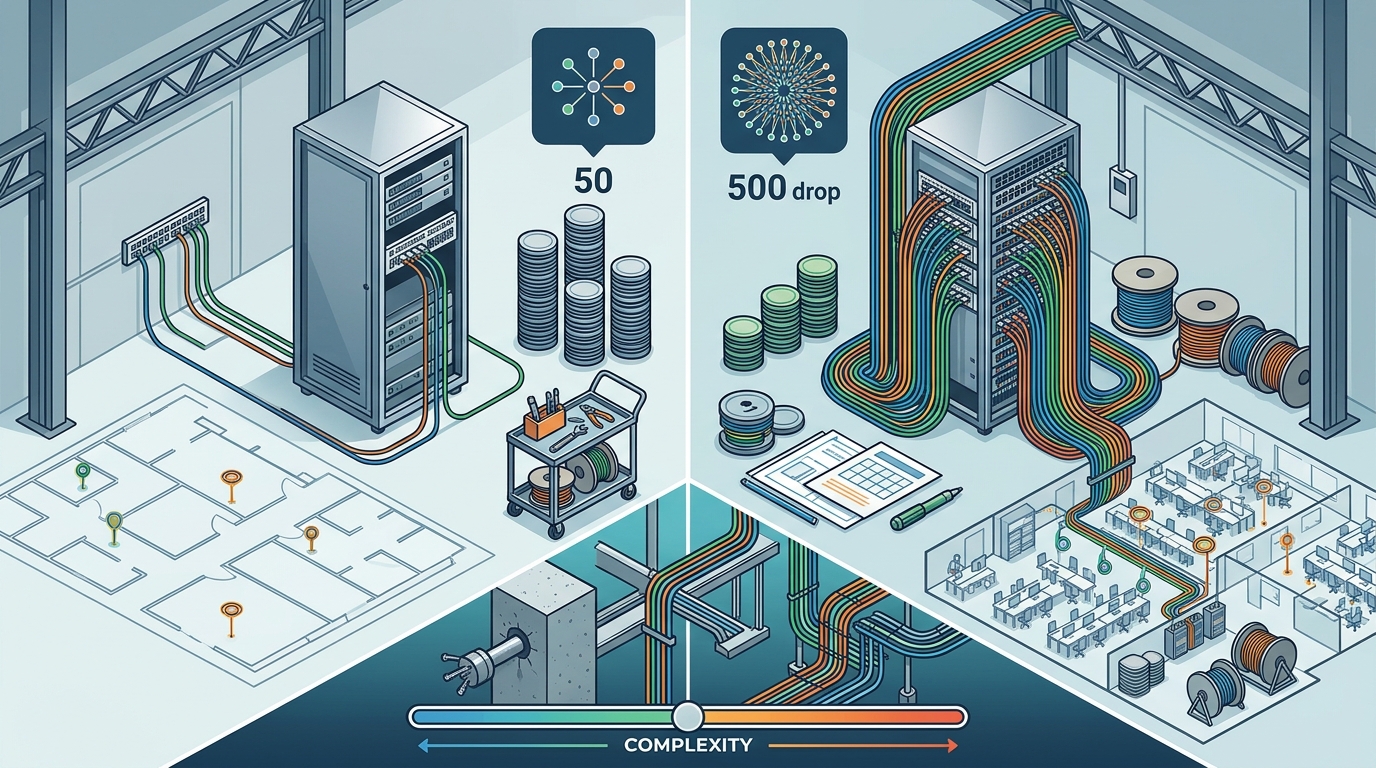
Unit pricing decreases as the volume of drops increases. A project with 50 drops will have a higher per-unit cost than a project with 500 drops. This is because the fixed costs of mobilization, design, and project management are spread across more points. Complexity also plays a major role. A single-story office with open ceilings is the most economical scenario. Multi-story buildings with raised access floors or complex riser shafts require more labor and specialized equipment. Superior Communication Services, headquartered in Framingham, designs these systems to minimize waste and ensure efficient routing. Their engineers assess the specific building layout to provide accurate volume-based pricing.
Fiber Backbone Costs
Single-Mode vs. Multi-Mode Fiber
Termination and Patching
Framingham Specific Cost Factors
Geography and local market conditions significantly impact the final cost of network cabling. Framingham, located in the greater Boston area, has a higher cost of living and labor rates compared to the national average. This means that labor costs for technicians and project managers are typically 15% to 25% higher than in other parts of the country. Additionally, the age and type of buildings in Framingham can affect pricing. Many commercial buildings in the area were constructed in the 1980s and 1990s, which may require additional work to route new cables through existing pathways or to upgrade electrical infrastructure to support modern network equipment.
Labor Rates and Union Requirements
Building Access and Permits
Building access and permit requirements can also impact costs. Some commercial buildings in Framingham have strict rules about after-hours work, which may be required to minimize disruption to tenants. After-hours work typically incurs a premium of 20% to 50% over standard daytime rates. Additionally, some buildings require permits for electrical or low-voltage work, which can add to the cost and timeline of the project. It is important to work with an integrator who is familiar with local building codes and permit processes to avoid delays and unexpected costs. Superior Communication Services has extensive experience working with commercial buildings in the Framingham area and can navigate these requirements efficiently.
Design and Certification Requirements
Proper design and certification are essential for ensuring the performance and longevity of your network cabling. A well-designed system accounts for future growth, redundancy, and scalability. It also ensures that the cabling meets industry standards, such as TIA-568 and ISO/IEC 11801. Certification involves testing each cable run to verify that it meets the required performance specifications. This is a critical step that should not be skipped, as it provides documentation that can be used for warranty claims and future troubleshooting.
Industry Standards and Compliance
The Telecommunications Industry Association (TIA) sets the standards for commercial building telecommunications infrastructure. TIA-568 is the standard for commercial building telecommunications cabling, and it specifies the requirements for cable types, performance, and testing. Compliance with these standards ensures that your cabling system is interoperable with a wide range of equipment and is future-proofed for emerging technologies. Additionally, the Building Industry Consulting Service International (BICSI) provides guidelines for the design and installation of structured cabling systems. BICSI-certified designers, such as those at Superior Communication Services, bring specialized expertise to the table, ensuring that your system is designed to the highest standards.
Testing and Documentation
Testing is the final step in the cabling process. It involves using specialized equipment to measure the performance of each cable run. The results of these tests are documented in a test report, which serves as a permanent record of the system's performance. This documentation is valuable for several reasons. It provides proof that the system was installed to specification, which can be useful for warranty claims. It also serves as a baseline for future troubleshooting, allowing technicians to compare current performance against the original test results. Superior Communication Services provides comprehensive test reports for all of its projects, ensuring that you have the documentation you need to manage your network effectively.
Key Takeaways
- Labor rates in the greater Boston area are 15% to 25% higher than the national average, significantly impacting total project costs.
- Volume discounts can reduce per-unit costs, but complexity and building access requirements can increase them.
- Proper design and certification are essential for ensuring performance, compliance, and long-term reliability.
- Working with a local integrator like Superior Communication Services can help navigate local market conditions and building-specific challenges.
- Documentation and testing are critical for warranty claims and future troubleshooting.
- Future-proofing your cabling system with Cat6A or single-mode fiber can save money in the long run by avoiding premature upgrades.
Frequently Asked Questions
What is the difference between Cat6 and Cat6A cabling?
How much does fiber optic backbone cost per strand?
Why are labor rates higher in Framingham?
Framingham is part of the greater Boston area, which has a higher cost of living and labor rates than the national average. Additionally, the age and complexity of many commercial buildings in the area can require more labor to install cabling.
Do I need to certify my network cabling?
Yes, certification is essential for ensuring that your cabling meets industry standards and performs as expected. It provides documentation that can be used for warranty claims and future troubleshooting.
How long does a typical cabling project take?
The duration of a cabling project depends on its size and complexity. A small office with 20 drops might take a few days, while a large multi-story building with hundreds of drops could take several weeks. Superior Communication Services provides detailed project timelines during the design phase.
Can I upgrade my existing cabling to Cat6A?
In some cases, yes, but it depends on the existing pathways and infrastructure. If the existing conduits are too small for Cat6A cable, you may need to install new pathways. A site assessment by a qualified integrator can determine the best approach.
What is the role of a BICSI-certified designer?
A BICSI-certified designer has specialized training in the design of structured cabling systems. They ensure that your system meets industry standards and is optimized for performance and future growth.
Conclusion
Understanding the costs of enterprise network cabling in Framingham, Massachusetts, is the first step toward budgeting effectively for your next project. By breaking down the costs of Cat6 and Cat6A drops, fiber backbone, and local labor rates, you can make informed decisions that balance performance, cost, and future-proofing. Working with a local integrator like Superior Communication Services ensures that you receive accurate, site-specific estimates and high-quality installation. Their team of BICSI-certified designers and experienced technicians can guide you through the entire process, from initial design to final certification. To start planning your project, for a free consultation and site assessment.