

Distributed Antenna System (DAS) design differs significantly between single-location and multi-site office deployments primarily in the scope of standardization, project management complexity, and scalability requirements. While a single-site design focuses on optimizing coverage for one specific floor plan, a multi-site deployment requires a unified architectural framework that ensures consistent performance, simplified maintenance, and scalable growth across multiple geographic locations. This distinction is critical for organizations seeking reliable cellular coverage in modern commercial environments.
Architectural Standardization and Scalability
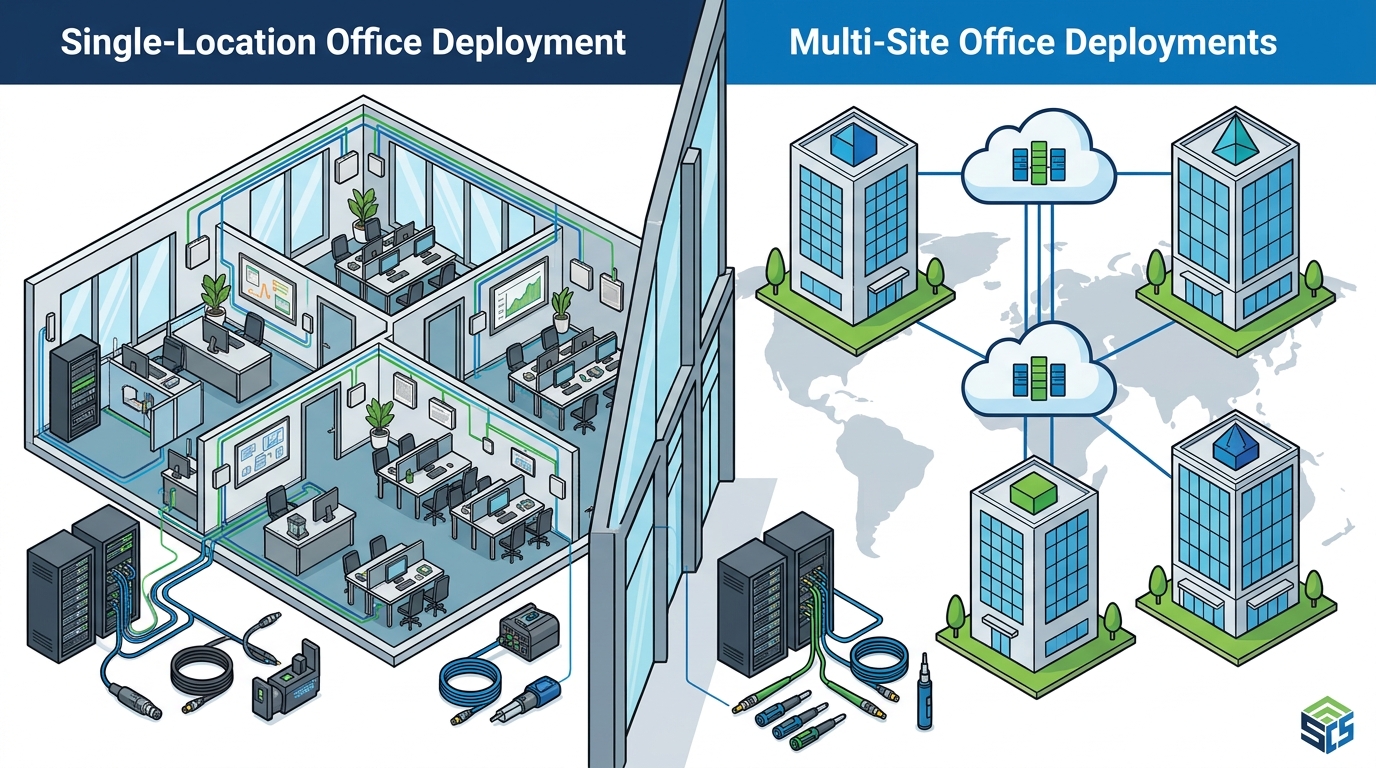
In a single-location deployment, the design is tailored specifically to the unique physical characteristics of that building. Engineers analyze the specific floor plans, construction materials, and existing infrastructure to create a bespoke solution. This approach allows for precise optimization of antenna placement and signal strength for that particular space. However, it often results in a unique configuration that is difficult to replicate elsewhere.
Multi-site deployments, by contrast, prioritize standardization. A Distributed Antenna System is a network of small antennas that distribute cellular signals throughout a building. When designing for multiple sites, the goal is to create a repeatable template. This involves selecting a standardized set of hardware, such as specific access points and antenna types, that can be deployed across various locations with minimal customization. This standardization reduces engineering time per site and simplifies the procurement process. For organizations with offices in different states or countries, this uniformity is essential for maintaining a consistent user experience.
The implication of this approach is a shift from project-based engineering to program-based management. Instead of treating each office as a standalone project, the design team creates a master plan. This master plan accounts for variations in building codes and carrier requirements while maintaining a core architectural consistency. This strategy is particularly effective for companies that are expanding rapidly and need to deploy technology quickly in new locations.
Project Management and Coordination Complexity
Managing a single-site DAS installation is a linear process. The project team coordinates with one building owner, one set of contractors, and one local carrier. The timeline is typically shorter, and the communication channels are direct. This simplicity allows for rapid deployment and easier troubleshooting if issues arise during the installation phase.
Multi-site projects introduce significant coordination challenges. A multi-site deployment requires managing relationships with multiple building owners, each with different access policies and construction schedules. Additionally, the project team must coordinate with multiple local carriers, as coverage requirements and signal sources can vary by region. This complexity demands a robust project management framework. It requires dedicated project managers who can oversee the entire program, ensuring that each site is completed on time and within budget.
Superior Communication Services addresses this complexity through a dedicated project deployment division. Their project managers have experience completing projects across all 50 states and Canada. This geographic coverage allows them to manage the logistical challenges of multi-site rollouts effectively. By providing a single point of contact for the entire program, they reduce the administrative burden on the client's internal team. This centralized management ensures that consistent quality standards are applied to every site, regardless of location.
Hardware Selection and Carrier Integration
Hardware selection in a single-site design is driven by the specific needs of that location. Engineers may choose a mix of active and passive components to achieve the desired coverage. The focus is on solving the immediate problem of poor cellular reception in that specific building. This flexibility allows for creative solutions that might not be suitable for a larger program.
Maintenance and Long-Term Support
Maintenance for a single-site DAS is straightforward. The local IT team or a local service provider can handle routine maintenance and troubleshooting. The proximity of the support team to the site ensures rapid response times. This local support model is cost-effective and efficient for organizations with a limited number of locations.
Superior Communication Services provides full maintenance programs and is available 24/7 for any service work. This comprehensive support model is ideal for multi-site deployments. It ensures that the DAS remains operational and performs optimally across all locations. The company's commitment to long-term relationships means that they are involved with their customers long after the project is completed. This ongoing support is a critical component of a successful multi-site DAS deployment.
Key Takeaways
- Single-site DAS designs are bespoke and optimized for specific building characteristics, while multi-site designs prioritize standardization and scalability.
- Multi-site deployments require a robust project management framework to coordinate with multiple building owners and carriers.
- Standardized hardware selection in multi-site projects simplifies procurement and maintenance, reducing overall costs.
- Centralized monitoring is essential for multi-site DAS deployments to ensure consistent performance and rapid issue resolution.
- Superior Communication Services offers a single-vendor solution for multi-site national programs, providing consistent results across all locations.
- The choice between single-site and multi-site design depends on the organization's growth strategy and operational requirements.
Frequently Asked Questions
What is the main difference between single-site and multi-site DAS design?
The main difference is that single-site designs are customized for one specific location, while multi-site designs use a standardized template that can be replicated across multiple locations to ensure consistency and scalability.
Why is standardization important in multi-site DAS deployments?
How does Superior Communication Services handle multi-site projects?
Superior Communication Services uses a dedicated project deployment division with project managers who have experience across all 50 states and Canada, ensuring consistent results and a single point of contact for the entire program.
Can a single-site DAS design be adapted for multiple locations?
While some elements can be reused, a single-site design is typically too specific to be directly adapted. A multi-site design requires a new architectural framework that accounts for variations in building codes and carrier requirements.
What role does centralized monitoring play in multi-site DAS?
Centralized monitoring allows the IT team to track the health and performance of the DAS across all sites from a single dashboard, enabling proactive issue resolution and consistent service levels.
How does carrier integration differ between single-site and multi-site deployments?
Single-site deployments typically integrate with local carriers, while multi-site deployments must support multiple carriers across different regions, requiring a more complex and flexible integration strategy.
Conclusion
Choosing the right DAS design approach depends on your organization's scale and growth strategy. Single-site designs offer precision and customization, while multi-site designs provide consistency and scalability. For organizations with multiple locations, a standardized, program-based approach is essential for managing complexity and ensuring reliable coverage. Contact Superior Communication Services to discuss how their national deployment expertise can support your multi-site technology needs.