
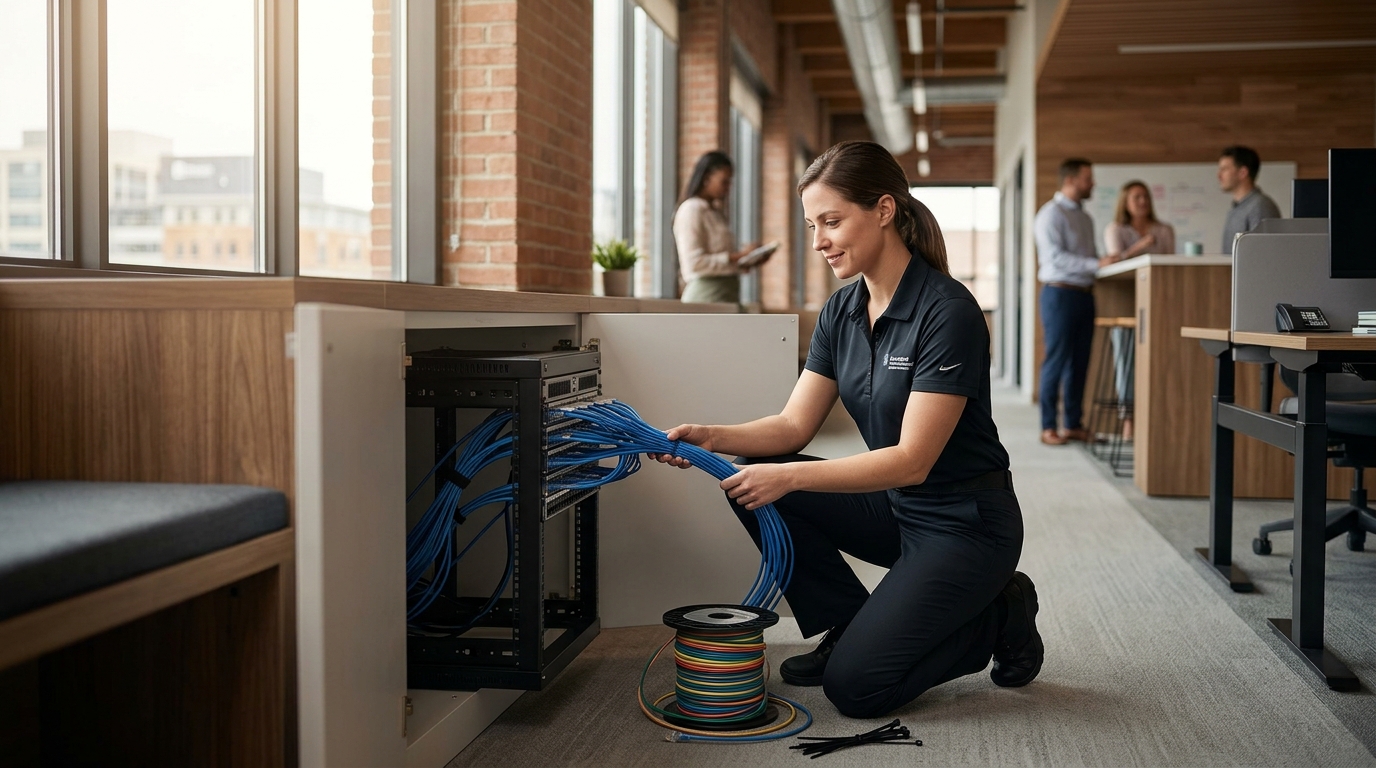
Structured cabling is the physical network infrastructure that connects your devices to the internet and internal systems. For a Framingham office, proper installation ensures reliable connectivity for VoIP, video conferencing, and data transfer. Superior Communication Services specializes in designing and installing these systems to meet modern business demands.
Understanding the Core Components of Structured Cabling
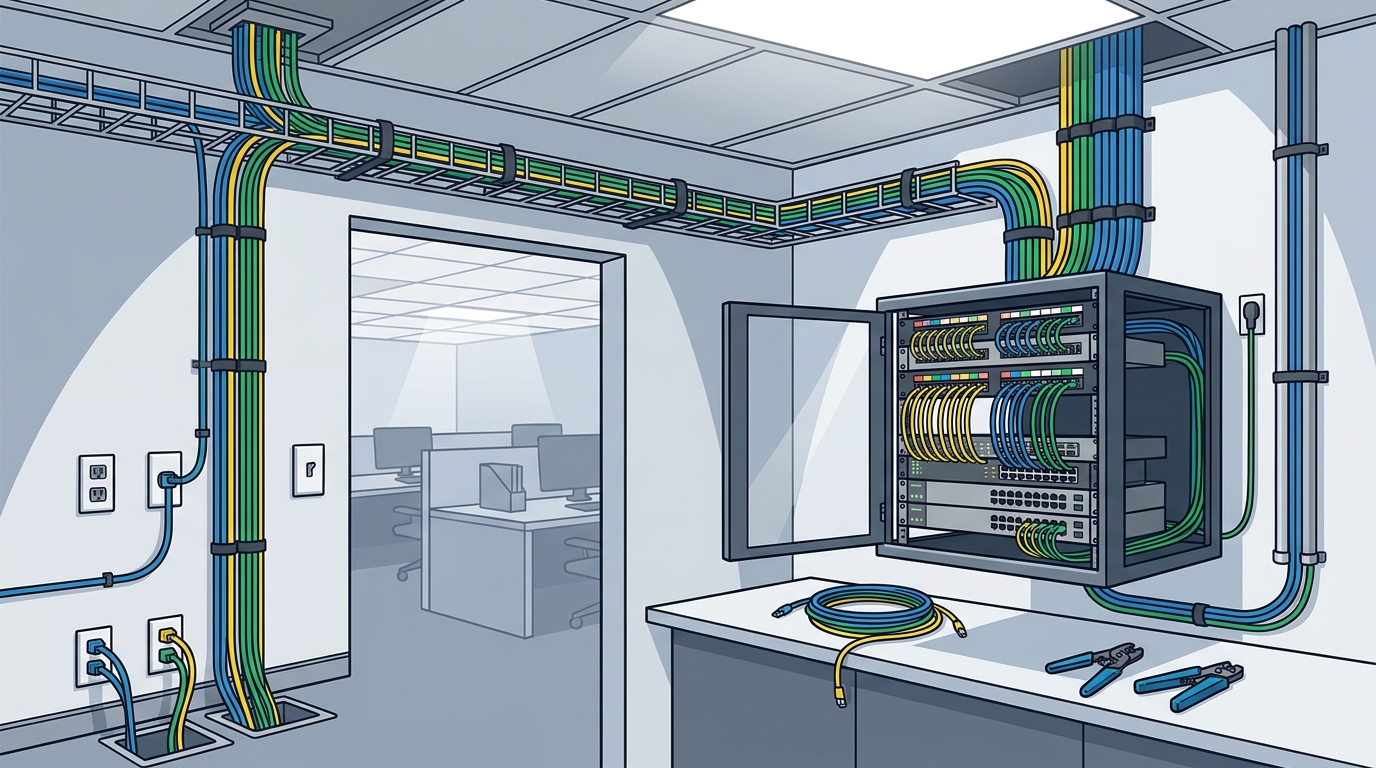
Structured cabling is a standardized approach to telecommunications wiring that separates voice and data networks. It typically consists of horizontal cabling, backbone cabling, and work area components. In a typical Framingham commercial building, you will encounter copper and fiber optic cables running through ceilings and walls.
Copper vs. Fiber Optic
Copper cabling, such as Cat6 or Cat6A, is ideal for short distances and connecting end-user devices. Fiber optic cabling is the backbone for high-speed data transmission over longer distances. Understanding the difference helps you budget correctly for your specific layout.
The Importance of Certification
Certification is the process of testing and verifying that the cabling meets industry standards. Without proper certification, you may experience intermittent connectivity issues that are difficult to troubleshoot. A certified installation provides a baseline for future troubleshooting and upgrades.
Why Framingham Offices Need Professional Installation
Framingham, Massachusetts, is a hub for technology and life sciences companies. Many offices in the area are located in older commercial buildings that may not have modern infrastructure. Professional installation ensures that your network can handle the bandwidth requirements of today's cloud-based applications.
Building Age and Infrastructure
Compliance with Local Codes
Massachusetts has specific building codes and fire safety regulations that apply to low-voltage wiring. Professional installers are familiar with these local requirements. This ensures your project passes inspection and remains compliant with local regulations.
The Installation Process: From Design to Deployment
The installation process follows a structured methodology to ensure accuracy and efficiency. It begins with a site survey and ends with final testing and documentation. Each phase is critical to the overall success of the project.
Site Survey and Design
Physical Installation and Termination
Technicians pull cables through conduits and ceilings, terminating them at patch panels and wall outlets. Precision is key during this phase to avoid signal degradation. Proper labeling and documentation are performed simultaneously to maintain clarity.
Testing and Certification
After installation, every cable is tested for continuity, length, and signal integrity. The results are documented in a certification report. This report serves as a warranty for the installation and a reference for future network changes.
Choosing the Right Partner for Your Project
Selecting the right partner is as important as the technology itself. You need a provider with experience in commercial environments and a commitment to quality. Superior Communication Services brings over 50 years of combined industry experience to every project.
Experience and Certifications
Look for a provider with certified engineers and technicians. Certifications such as BICSI RCDD and AVIXA CTS demonstrate expertise in design and installation. These credentials ensure that your project is handled by qualified professionals.
Local Presence and Support
A local presence in Framingham or the greater Boston area is beneficial for ongoing support. It allows for quicker response times and easier coordination. Contacting a local office can help you schedule a consultation and site survey.
Key Takeaways
- Structured cabling is the foundation of your office network, connecting devices to the internet and internal systems.
- Fiber optic and copper cabling serve different purposes; understanding the difference helps in planning your infrastructure.
- Certification is essential for verifying that your cabling meets industry standards and ensures long-term reliability.
- Older buildings in Framingham may require upgrades to support modern bandwidth needs.
- Professional installation follows a structured process: site survey, design, physical installation, and testing.
- Choosing a partner with local experience and proper certifications ensures a smooth and compliant project.
Frequently Asked Questions
What is the difference between Cat6 and Cat6A cabling?
Cat6 supports speeds up to 10 Gbps at shorter distances, while Cat6A supports 10 Gbps at longer distances and is more resistant to crosstalk. Cat6A is often recommended for future-proofing in high-density environments.
How long does a structured cabling installation take?
The duration depends on the size of the office and the complexity of the layout. A small office might take a few days, while a larger multi-floor project could take several weeks. A detailed project plan helps manage timelines effectively.
Do I need to move my furniture for the installation?
In most cases, minimal disruption is required. Technicians can work around existing furniture, but moving items may be necessary for ceiling work or specific outlet locations. Coordination with your facility manager helps minimize impact on daily operations.
What is the lifespan of structured cabling?
Can I install structured cabling myself?
While it is technically possible, it is not recommended for commercial offices. Professional installation ensures compliance with codes, proper certification, and long-term reliability. DIY installations may void warranties and lead to costly errors.
Conclusion
Investing in professional structured cabling is a strategic decision for your Framingham office. It ensures a reliable, scalable, and compliant network infrastructure. Superior Communication Services is ready to help you design and install a system that meets your current needs and supports your future growth. Reach out to schedule a consultation today.