
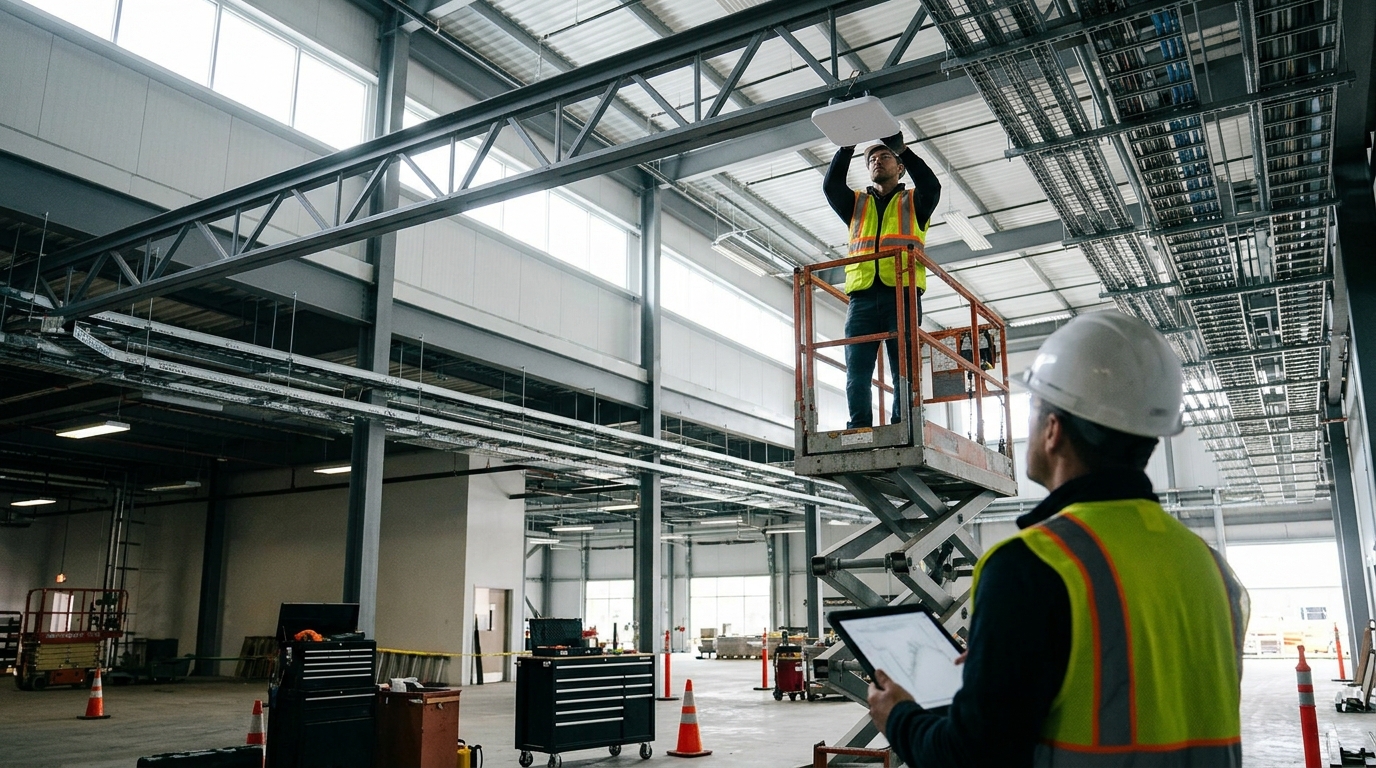
Before hiring a company for an enterprise WiFi deployment, you must verify their design methodology, certification levels, and post-installation support capabilities. A reliable integrator performs a physical site survey rather than relying on software simulations alone. They also provide a clear roadmap for maintenance and troubleshooting. Superior Communication Services emphasizes that a fast, secure, and reliable wireless connection is critical to any organization in today’s business environment.
The Importance of Physical Site Surveys
Many integrators rely on theoretical software models to plan access point placement. This approach often fails because it ignores physical obstructions like concrete, metal, and glass. Enterprise WiFi design is the process of mapping signal coverage to specific user density and application requirements. A physical site survey involves walking the facility with specialized equipment to measure actual signal strength and interference. This data ensures that access points are placed in locations that provide maximum performance and coverage of your entire space.
For example, a large open office with a drop ceiling behaves differently than a warehouse with high metal shelving. Without a physical survey, you may end up with dead zones or overlapping signals that cause roaming issues. The implication is that your employees will experience dropped connections during critical video calls. You need a partner who uses wireless design software to identify the best locations to install your access points and the correct orientation of antennas.
Verifying Technical Certifications and Experience
Certifications are not just badges; they prove that a technician has passed rigorous exams on specific technologies. AVIXA CTS is a certification that validates a professional’s knowledge in audio visual and wireless integration. Similarly, BICSI RCDD is a credential that confirms expertise in designing structured cabling and network infrastructure. When you hire a team, you should ask for the specific certifications held by the engineers who will design your project, not just the sales staff.
Experience matters as much as paper credentials. A team with over 50 years of industry experience can anticipate problems that a junior technician might miss. For instance, integrating a new WiFi network with an existing legacy system requires deep knowledge of network protocols. Superior Communication Services designers hold BICSI RCDD and AVIXA CTS certifications, ensuring that the final design and specification is the solution that will work best for your business.
Hardware Agnosticism and Vendor Partnerships
Some integrators are locked into a single hardware vendor, which can limit your options. You need a partner who can recommend the best equipment for your specific needs, whether that is from Extreme Networks, Meter, or another provider. Hardware agnosticism is the ability to design and install solutions using multiple vendor products without bias. This approach ensures that you are not forced into a proprietary ecosystem that may not scale with your future growth.
Consider a scenario where your building requires both enterprise WiFi and cellular boosting. A single-vendor integrator might push you toward a solution that excels in one area but fails in the other. By working with a partner who has broad vendor relationships, you can combine the best of both worlds. Superior Communication Services provides cellular coverage design and installation which includes cell boosting, small cell and DAS solutions, allowing for a comprehensive connectivity strategy.
Post-Installation Support and Maintenance
The installation is only the beginning. You need a clear plan for how the network will be monitored and maintained after the project is complete. Preventive maintenance is the practice of regularly inspecting and servicing network equipment to prevent failures before they occur. Without this, you may face unexpected downtime that disrupts business operations. Ask the integrator about their monitoring tools and their response time for service requests.
For example, a network outage in a financial trading floor can cost thousands of dollars per minute. You need a partner who offers 24/7 availability for service work. Superior Communication Services has full maintenance programs and is available 24/7 for any service work that is necessary. This level of support ensures that your investment remains protected long after the initial installation is finished.
The Value of a Single-Source Contractor
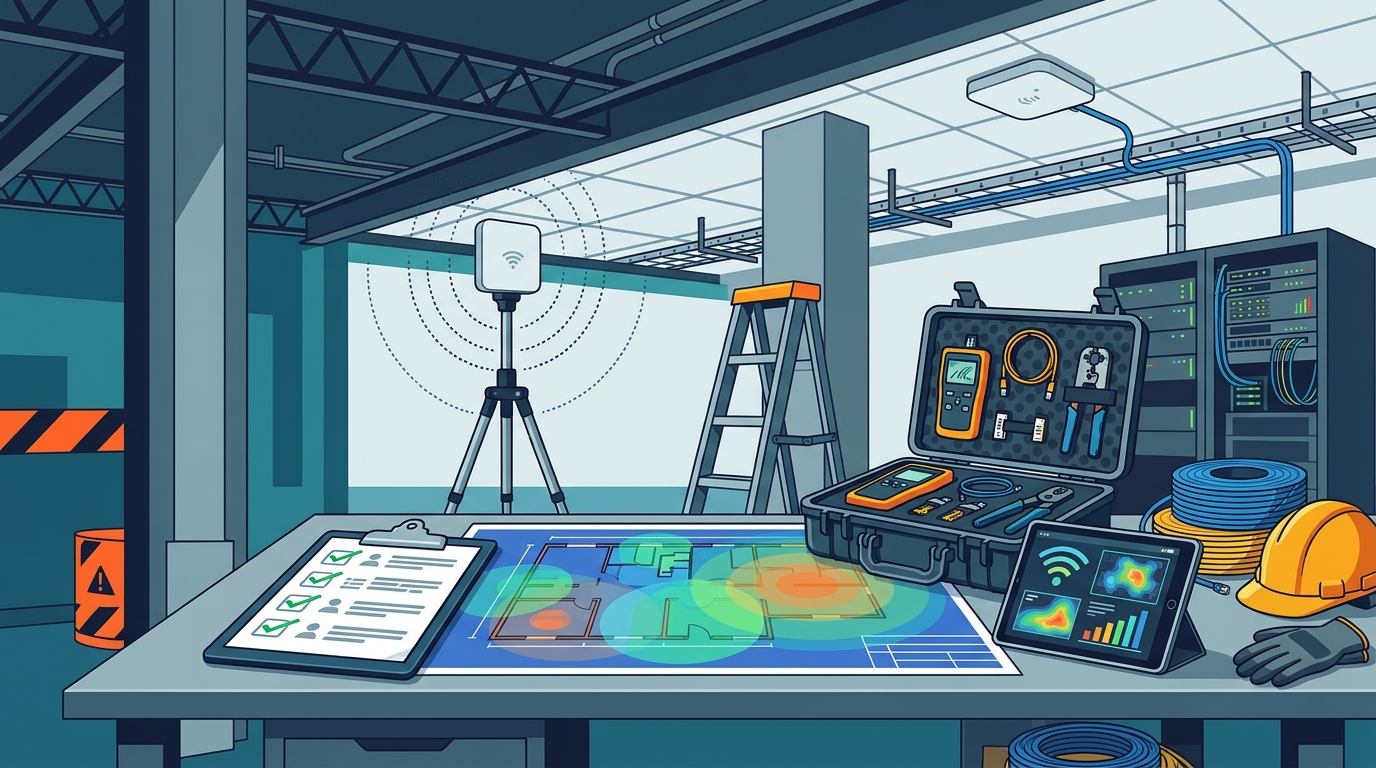
Managing multiple vendors for different parts of your technology stack creates accountability gaps. When the WiFi fails, the cabling vendor blames the access points, and the access point vendor blames the cabling. Single-source contracting is the use of one company to design, install, and maintain all low-voltage technology systems. This approach provides cost and management efficiencies with a single source contractor for all technologies throughout your project.
Imagine a new office buildout where you need network cabling, audio visual systems, and security cameras. A single-source contractor coordinates all these trades, ensuring that they do not conflict during construction. This reduces the risk of delays and budget overruns. Superior Communication Services offers project deployments with project managers that have successfully completed projects across all 50 states and Canada, providing consistent results delivered on time and on budget.
Key Takeaways
- Always require a physical site survey to validate theoretical design models.
- Verify that the engineers holding the design responsibility possess relevant certifications like AVIXA CTS or BICSI RCDD.
- Choose a hardware-agnostic partner to avoid being locked into a single vendor ecosystem.
- Confirm the scope of post-installation support, including 24/7 monitoring and preventive maintenance.
- Consider a single-source contractor to streamline accountability across cabling, WiFi, and security systems.
- Review the integrator’s track record with similar building types and user densities.
Frequently Asked Questions
How long does an enterprise WiFi deployment typically take?
The duration depends on the size of the facility and the complexity of the design. A small office might take a few days, while a multi-story commercial building could take several weeks. The design phase, including site surveys, often takes longer than the physical installation itself.
Do I need to replace my existing network cabling for new WiFi?
Not necessarily. Modern access points often use existing Ethernet cabling. However, if your cabling is older than 10 years or does not support the required bandwidth, an upgrade may be recommended during the design phase.
What is the difference between a site survey and a design?
A site survey is the data collection process where engineers measure signal strength and interference in the physical space. The design is the resulting plan that uses this data to determine the optimal placement and configuration of access points.
Can one company handle both WiFi and security systems?
Yes, many technology integrators offer both services. Using a single vendor for both can simplify project management and ensure that the systems are integrated seamlessly, such as using the same network infrastructure for both data and video feeds.
How do I know if my current WiFi is underperforming?
Signs of underperformance include slow speeds, dropped connections, and difficulty roaming between access points. A professional audit can identify specific issues and provide a roadmap for improvement.
What is the role of a project manager in a WiFi deployment?
A project manager coordinates the schedule, manages the installation team, and serves as the primary point of contact for the client. They ensure that the project stays on time and within budget, and that all deliverables are met.
Conclusion
Hiring the right partner for your enterprise WiFi deployment is a critical decision that impacts your daily operations. By focusing on physical surveys, verified certifications, and comprehensive support, you can ensure a successful outcome. To discuss your specific needs and receive a tailored proposal for your facility, contact our team.