
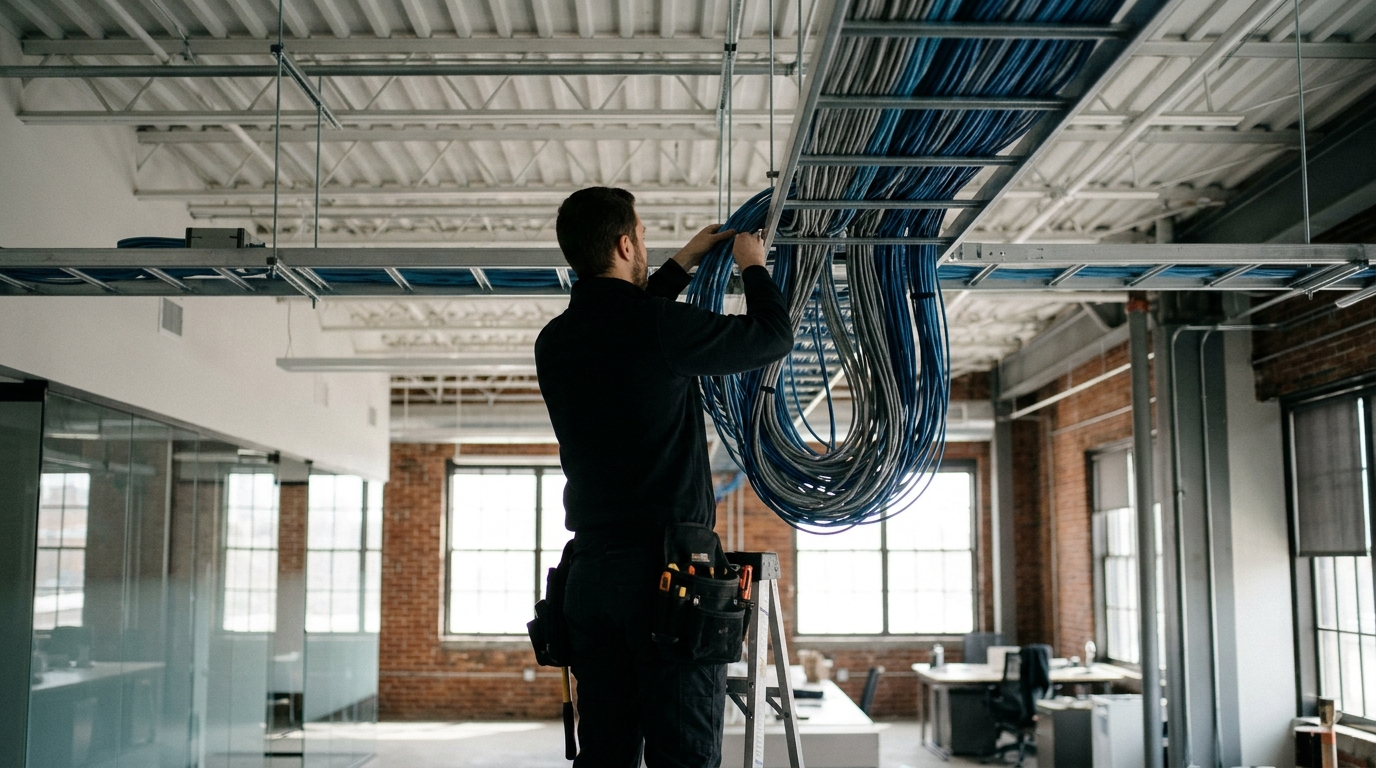
For a business in Framingham, the price difference between Cat6 and Cat6A network drops is driven by thicker cable, stricter installation tolerances, and higher labor costs. While Cat6 supports 10 Gigabit speeds up to 55 meters, Cat6A extends that to 100 meters, making it the safer long-term investment for future-proofing. Superior Communication Services helps organizations in the Framingham area navigate these costs by providing detailed design and installation estimates that align with specific bandwidth needs.
Understanding the Technical Cost Drivers
Furthermore, Cat6A has stricter installation tolerances. The cable cannot be bent as sharply, and the connectors must be terminated with extreme precision to maintain signal integrity. These technical requirements mean that certified technicians must spend more time on each drop, increasing the labor component of the total price. For a business in Framingham, this means that while the material cost is higher, the labor premium is often the larger factor in the final invoice. For additional details, review the About Us page.
Bandwidth Requirements and Future-Proofing
Choosing between Cat6 and Cat6A is not just about current speed; it is about how long the infrastructure will remain viable. Cat6 is certified for 1 Gigabit Ethernet over 100 meters and 10 Gigabit Ethernet over 55 meters. If your current applications do not require 10 Gigabit speeds, Cat6 may be sufficient and more cost-effective. However, as data demands grow, the 55-meter limit of Cat6 can become a bottleneck in larger office spaces.
Cat6A, on the other hand, is certified for 10 Gigabit Ethernet over the full 100-meter channel. This makes it the preferred choice for organizations planning to adopt high-bandwidth applications such as video conferencing, cloud-based storage, or AI processing. For a company in Framingham looking to avoid the cost of a full re-cabling project in five to seven years, the upfront premium for Cat6A is often justified by the extended lifespan of the infrastructure.
Installation Complexity in Commercial Buildings
The physical environment of a commercial building in Framingham plays a significant role in pricing. Older buildings with existing conduit runs may have tight bends that are difficult for the stiffer Cat6A cable to navigate. In such cases, installers may need to replace sections of conduit or use larger pathways, adding to the project cost. Newer buildings with modern infrastructure are generally more accommodating to Cat6A, but the labor cost for careful handling remains higher than for Cat6.
Additionally, Cat6A often requires shielded connectors and patch panels to maintain its performance. These components are more expensive than their unshielded Cat6 counterparts. The cumulative cost of shielded hardware, combined with the labor for precise termination, can result in a total installed cost that is significantly higher than a standard Cat6 deployment. Understanding these factors helps businesses budget accurately for their network infrastructure projects.
Long-Term Value and Maintenance Considerations
When evaluating the price difference, it is essential to consider the total cost of ownership over the life of the installation. Cat6A’s ability to support higher speeds without crosstalk issues can reduce the need for future upgrades. This long-term stability can offset the initial price premium, especially for businesses that plan to remain in their current location for an extended period. In contrast, Cat6 may require a more frequent upgrade cycle as technology advances, leading to higher cumulative costs over time.
Maintenance is another factor to consider. Cat6A’s stricter specifications mean that any damage or improper termination is more likely to cause performance issues. This requires a higher level of expertise for troubleshooting and repair. Superior Communication Services provides ongoing maintenance and support for both Cat6 and Cat6A installations, ensuring that your network remains reliable and performs to its full potential. By choosing a partner with deep expertise in structured cabling, you can mitigate the risks associated with higher-performance cabling.
Key Takeaways
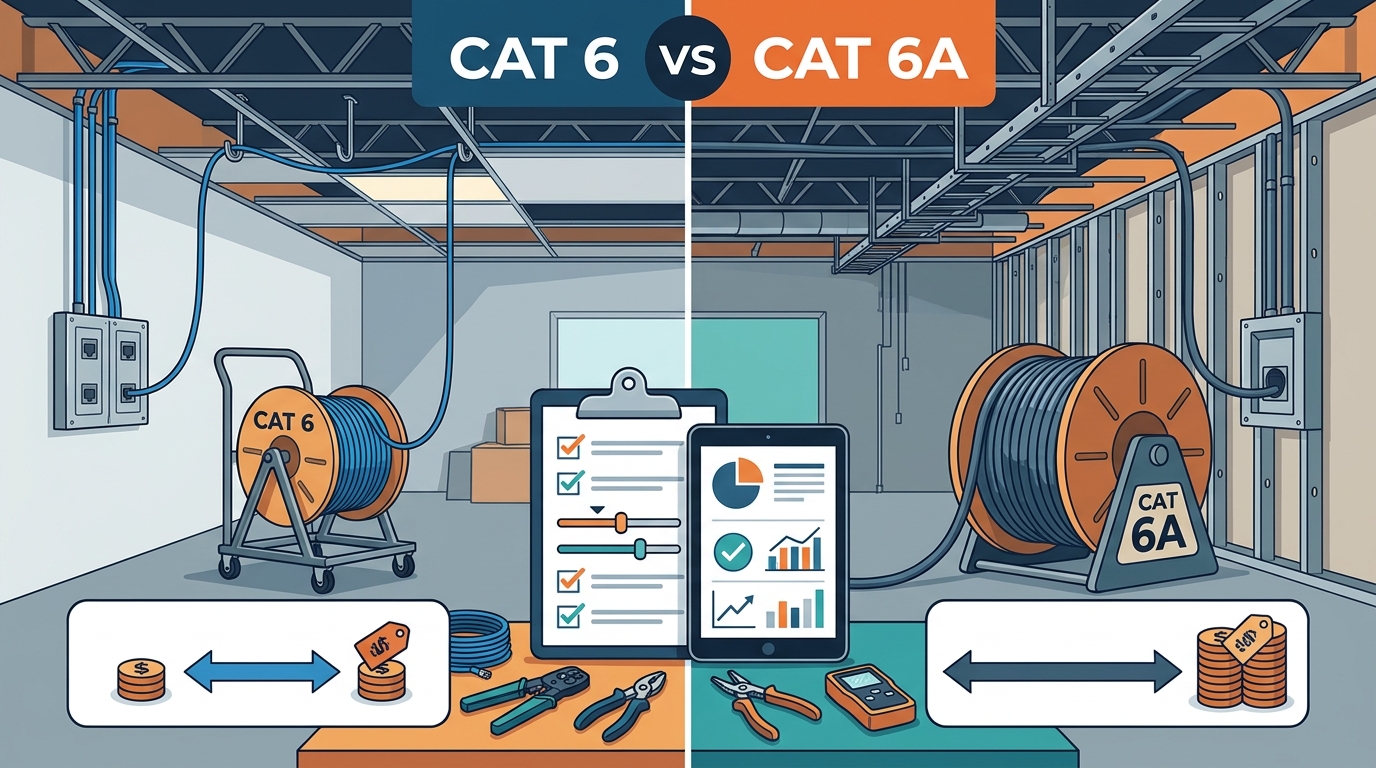
- Cat6A typically costs more per drop than Cat6 due to thicker cable and stricter installation requirements.
- Cat6 supports 10 Gigabit speeds up to 55 meters, while Cat6A supports 10 Gigabit over the full 100-meter channel.
- Labor costs are a major factor in the price difference, as Cat6A requires more time and precision to install.
- Shielded hardware is often required for Cat6A, adding to the material cost of the project.
- Future-proofing with Cat6A can reduce the need for costly re-cabling in the future.
- Building infrastructure, such as conduit size and bend radius, can impact the feasibility and cost of Cat6A installation.
- Choosing a certified installer with experience in both standards ensures optimal performance and longevity.
Frequently Asked Questions
Is Cat6A worth the extra cost for a small business?
For small businesses with modest bandwidth needs, Cat6 may be sufficient and more cost-effective. However, if you anticipate growth or plan to use high-bandwidth applications, Cat6A can be a worthwhile investment to avoid future upgrades.
Can I mix Cat6 and Cat6A in the same network?
Yes, you can mix Cat6 and Cat6A in the same network. The overall network speed will be limited by the slowest cable in the path, so it is important to ensure that critical paths use the higher-performance cable.
How much more does Cat6A cost per drop?
The cost difference depends on the complexity of the installation and the specific hardware used.
Does Cat6A require special tools for installation?
Yes, Cat6A requires specialized tools for termination and testing to ensure that the cable meets the strict performance standards. Certified technicians are trained to use these tools correctly.
Will Cat6A become obsolete in the next five years?
Cat6A is designed to support 10 Gigabit speeds, which are expected to remain relevant for the next decade. While newer standards like Cat7 and Cat8 are emerging, Cat6A offers a good balance of performance and cost for most business applications.
How does the location of my business in Framingham affect the cost?
The age and infrastructure of your building can impact the cost. Older buildings may require additional work to accommodate Cat6A, while newer buildings may be more compatible. A site survey can help determine the specific challenges and costs.
Conclusion
Choosing between Cat6 and Cat6A is a strategic decision that balances current needs with future growth. While Cat6A carries a higher upfront cost, its ability to support 10 Gigabit speeds over longer distances makes it a valuable investment for long-term stability. By working with a trusted partner, you can ensure that your network infrastructure is designed and installed to meet your specific requirements. To plan your visit, contact our team today to discuss your cabling needs and receive a detailed estimate for your Framingham business.