
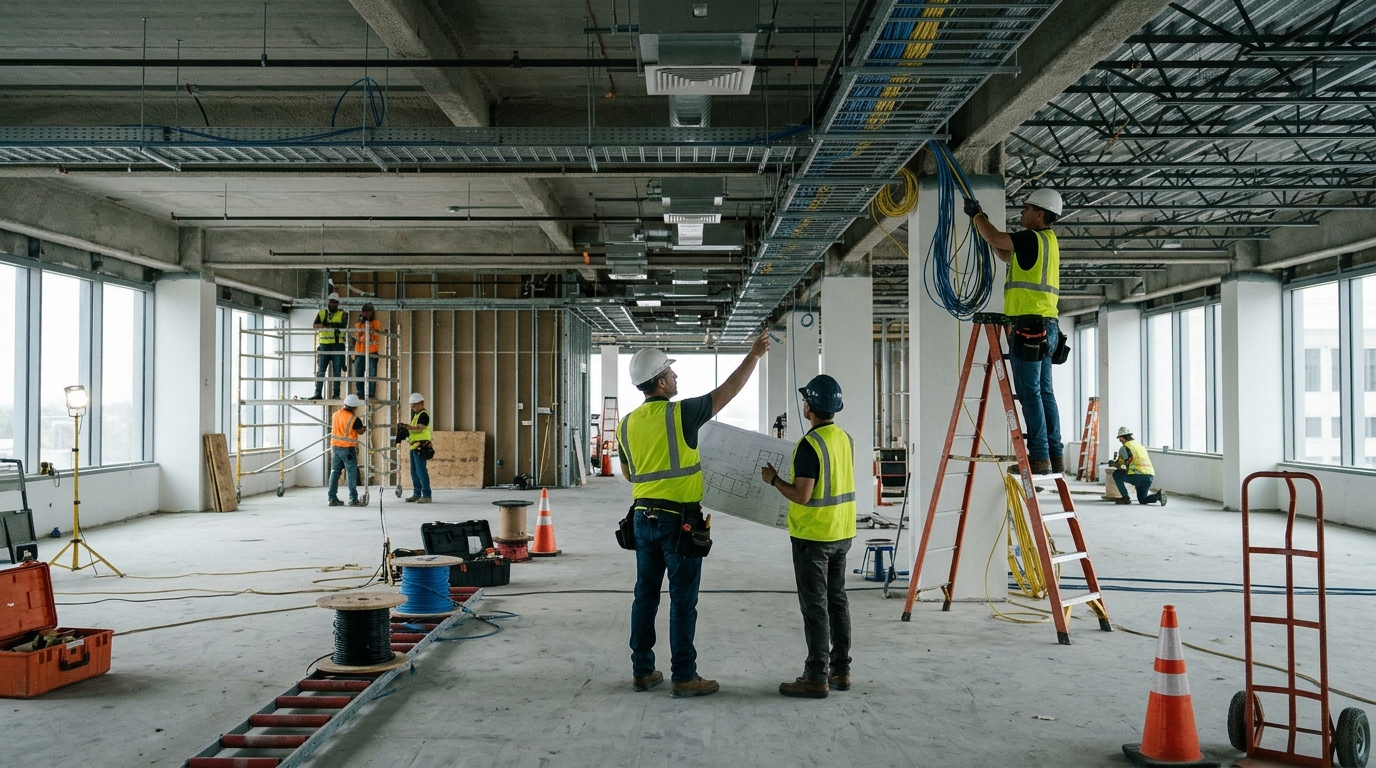
Choosing between a single technology integrator and separate cabling and AV contractors is a critical decision for any commercial office buildout. Superior Communication Services recommends a single integrator for most mid-to-large organizations because it ensures seamless system integration, a single point of accountability, and reduced project risk. While separate contractors may offer lower initial quotes, the hidden costs of coordination and compatibility often outweigh the savings. This approach is best suited for businesses that value long-term reliability and operational efficiency over short-term budget cuts.
The Single Integrator Approach
A single integrator is a firm that designs, installs, and maintains multiple technology disciplines under one contract. This model consolidates network cabling, audio visual systems, and security solutions into a unified project plan. By managing all low-voltage systems internally, the integrator ensures that every component works together as a cohesive ecosystem. This eliminates the friction that often occurs when different vendors blame each other for system failures.
Strengths of Unified Execution
The primary advantage of this model is accountability. When one team handles the entire scope, there is a single point of contact for all project updates and issues. This streamlines communication and accelerates decision-making. Furthermore, a unified team can optimize the physical layout of the office to accommodate both data and AV requirements simultaneously, preventing costly rework during construction.
Limits and Considerations
Single integrators may have a higher upfront cost compared to piecemeal hiring. However, this cost reflects the value of integrated design and guaranteed compatibility. Organizations with very small, isolated technology needs might find this model overkill, but for comprehensive buildouts, the efficiency gains are significant.
The Separate Contractor Approach
Hiring separate contractors involves engaging distinct firms for specific tasks, such as one for structured cabling and another for AV installation. This approach is often driven by a desire to minimize individual line-item costs. Each vendor focuses solely on their specific trade, which can lead to deep specialization in that narrow area.
Strengths of Specialized Hiring
Limits and Risks
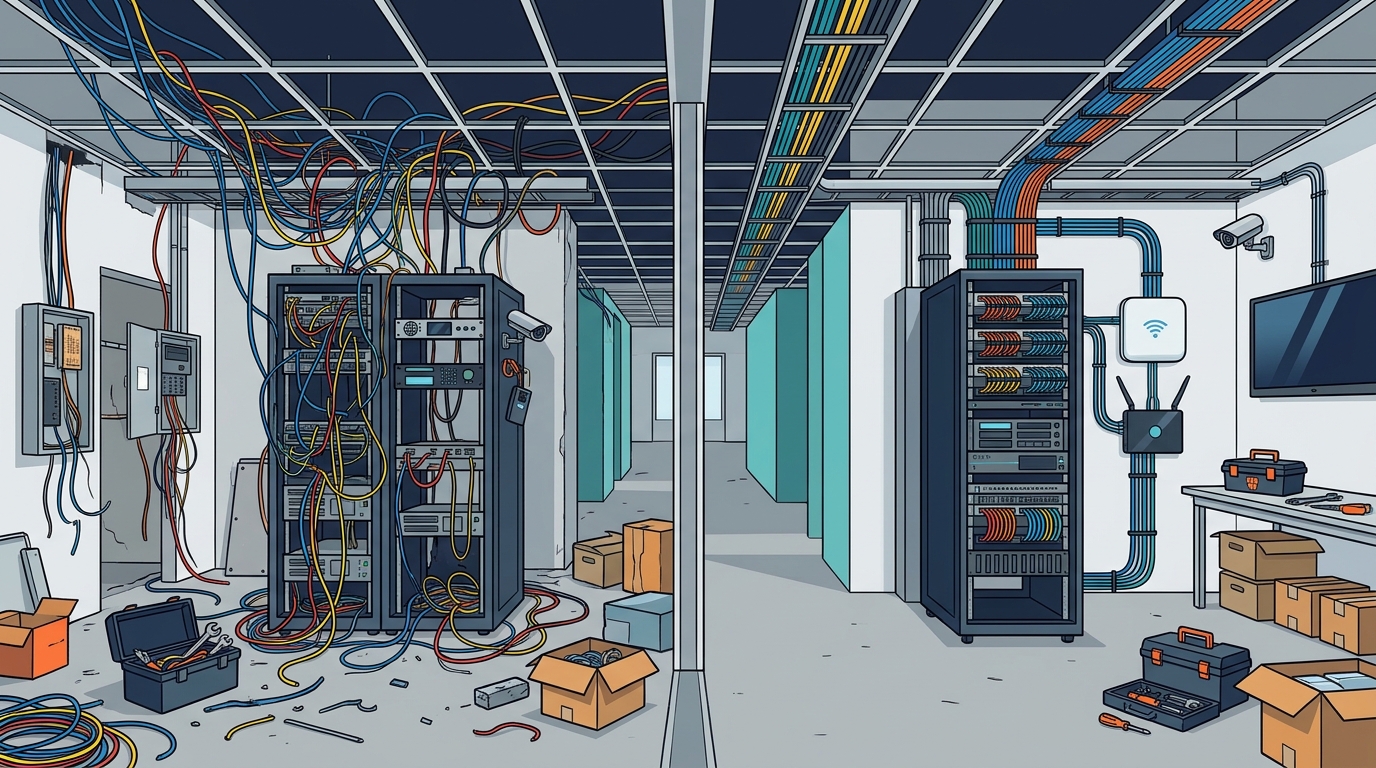
The major limitation is the lack of holistic design. Cabling and AV systems are deeply interconnected; a poor cable choice can degrade AV signal quality, and improper rack layout can hinder future expansion. When separate vendors work in silos, coordination gaps arise. Disputes over responsibility for failures can delay project completion and increase overall costs. This approach suits only the most experienced project managers who can effectively orchestrate multiple third parties.
Comparison of Integration Models
| Criteria | Single Integrator | Separate Contractors |
|---|---|---|
| Accountability | Single point of contact | Multiple vendors, shared blame |
| System Compatibility | Guaranteed by unified design | Requires manual coordination |
| Project Timeline | Streamlined and predictable | Prone to coordination delays |
| Long-Term Support | Unified maintenance contract | Fragmented support agreements |
| Initial Cost | Premium for integration | Lower line-item quotes |
Choosing the Right Model for Your Needs
Selecting the right approach depends on the complexity of your project and your internal resources. Understanding the trade-offs helps you align your strategy with your business goals.
Choose a Single Integrator If
You are executing a multi-room or multi-site buildout. Your team lacks dedicated IT project management resources. You require integrated security, AV, and network systems that must function as a single unit. You value long-term maintenance simplicity and want a single vendor responsible for the entire lifecycle of the technology.
Choose Separate Contractors If
Your project is extremely small and isolated, such as a single cable drop. You have a highly experienced internal IT team capable of managing multiple vendor relationships. You are working with a general contractor who already manages all low-voltage trades. You are prioritizing the lowest possible initial bid over long-term operational efficiency.
How Superior Communication Services Handles Integration
Superior Communication Services operates as a full-service technology design and installation company. We specialize in providing voice and data, copper and fiber optic cabling, as well as audio visual and security solutions. Our team of designers and engineers brings over 50 years of industry experience to every project. We do not just install equipment; we design comprehensive solutions tailored to your specific business needs.
Our process begins with a detailed needs assessment and site walk-through. We then develop a unified design that integrates all technology layers. During the build phase, a dedicated project team remains constant throughout the buildout, ensuring consistency and quality. This approach allows us to deliver projects on time and within budget, providing a seamless transition to your new workspace. For organizations looking to streamline their technology infrastructure, our design workroom services offer the expertise needed to plan a successful buildout.
Frequently Asked Questions
Can I switch from separate contractors to a single integrator mid-project?
Switching mid-project is possible but often costly. You may need to re-evaluate existing installations for compatibility and re-negotiate contracts. It is best to decide on the integration model during the planning phase to avoid redundant work and ensure system coherence.
Does a single integrator always cost more than separate vendors?
Not necessarily. While line-item quotes from separate vendors may appear lower, the total cost of ownership often favors a single integrator. Coordination overhead, potential rework, and fragmented maintenance contracts can increase the total expense of separate hiring.
What if my existing cabling is already installed by another vendor?
A single integrator can work with existing infrastructure. We can audit current cabling to ensure it meets the requirements for new AV or security systems. If upgrades are needed, we can integrate them into the new project scope, ensuring compatibility without requiring a full rip-and-replace.
How does a single integrator handle warranty claims?
With a single integrator, you have one warranty agreement covering all installed systems. If an issue arises, the integrator is responsible for diagnosing and resolving it, regardless of which component failed. This eliminates the need to navigate multiple vendor support channels.
Is a single integrator suitable for small offices?
For very small offices with minimal technology needs, separate contractors might be sufficient. However, if you plan to scale or require integrated security and AV, a single integrator provides a more robust foundation for future growth.
Conclusion
For most commercial office buildouts, the single integrator model offers superior value through unified design, accountability, and streamlined support. While separate contractors may offer lower initial quotes, the risks of coordination failure and fragmented support often outweigh the savings. Superior Communication Services provides the expertise and dedicated team structure necessary to deliver a seamless, future-ready technology environment. To discuss your project needs and explore how our integrated approach can benefit your organization, contact our team.