
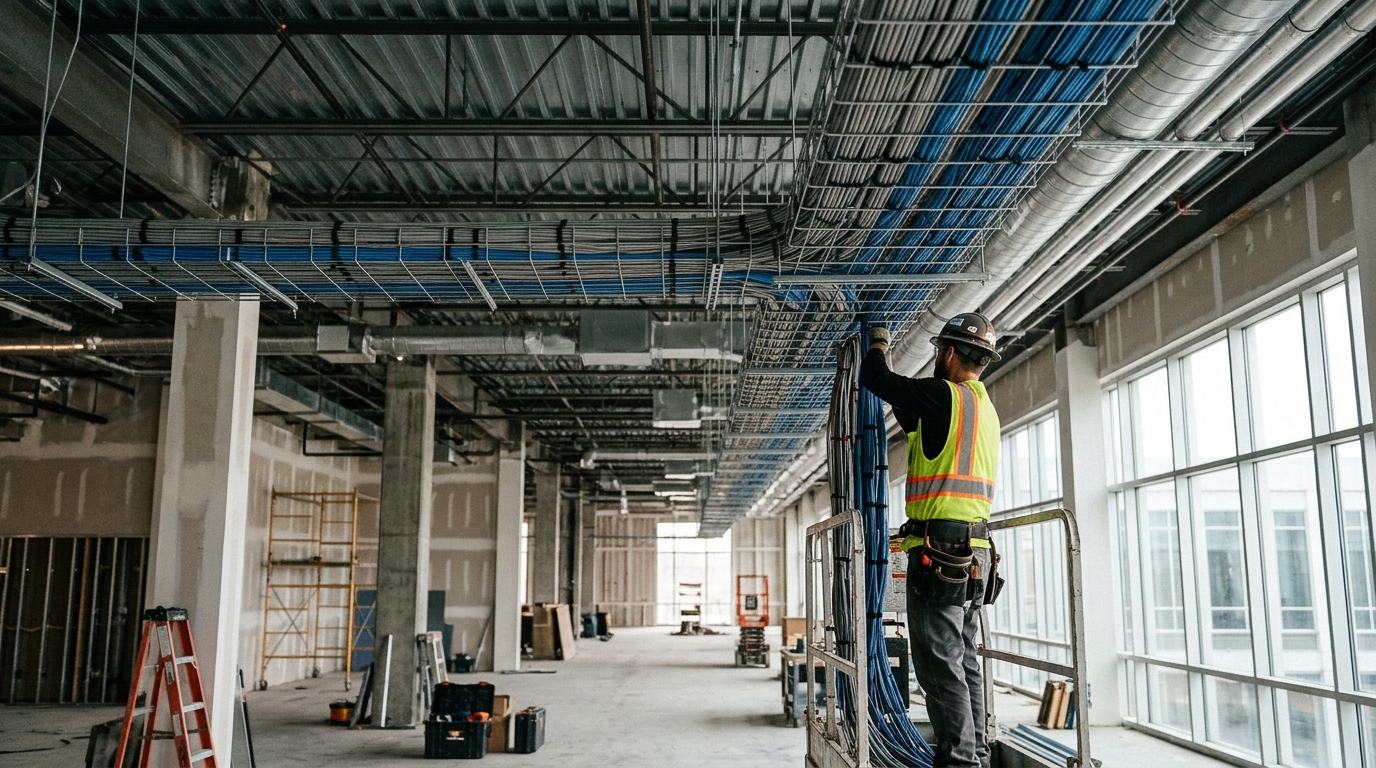
Most new offices use copper for horizontal runs because it is cost-effective, easy to terminate, and supports Power over Ethernet (PoE) for devices like IP phones and cameras. While fiber offers higher bandwidth, copper remains the practical standard for the final drop to the desk due to its flexibility and lower installation complexity. This approach ensures reliable connectivity without the premium cost of fiber to every workstation.
The Economics of Copper Infrastructure
Copper cabling is significantly cheaper to install than fiber optic cabling. The cost difference is not just in the cable itself but in the labor required for termination. Fiber requires specialized fusion splicing and testing equipment, which increases labor costs. Copper uses standard RJ45 connectors that technicians can terminate quickly with basic tools. This economic advantage makes copper the default choice for horizontal runs in most commercial buildings.
For a typical office floor with 50 workstations, the savings on copper versus fiber can be substantial. The lower material and labor costs allow organizations to allocate budget to other critical infrastructure components. This financial efficiency is a primary driver for building owners and IT managers planning new spaces.
Power Delivery and Device Compatibility
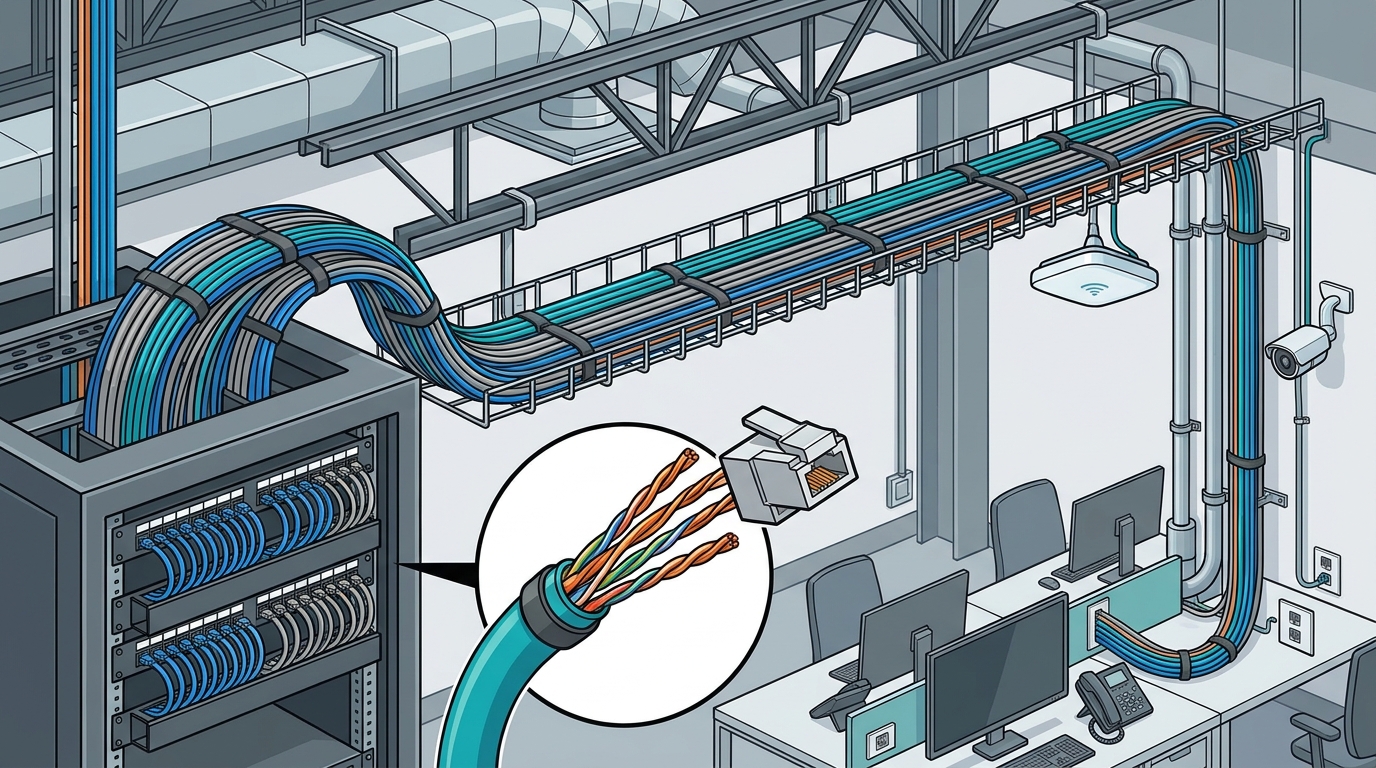
Power over Ethernet (PoE) is a critical feature that copper cables provide natively. PoE allows network cables to deliver electrical power to devices such as IP phones, wireless access points, and security cameras. This eliminates the need for separate power outlets near every device, simplifying installation and reducing clutter. Fiber optic cables cannot carry electrical power, requiring separate power drops for each device.
Modern PoE standards, such as PoE+ and PoE++, deliver sufficient power for high-demand devices. This capability makes copper the only viable option for many horizontal runs. Organizations relying on IP-based communication and security systems depend on this power delivery feature. The integration of data and power in a single cable streamlines the overall infrastructure design.
Flexibility and Ease of Termination
Copper cables are more flexible and easier to work with in tight spaces. Horizontal runs often involve navigating through ceilings, walls, and under floors where space is limited. Copper’s smaller diameter and flexibility make it easier to route through conduits and around obstacles. Fiber optic cables are more rigid and have larger bend radii, making them more difficult to install in complex environments.
Termination is another key factor. Technicians can terminate copper cables at both ends using standard tools and connectors. This process is fast and reliable, allowing for quick deployment and reconfiguration. Fiber termination requires precision and specialized equipment, which can slow down installation and increase the risk of errors. The ease of working with copper makes it ideal for dynamic office environments where changes are frequent.
Bandwidth Sufficiency for Typical Office Needs
Integration with Broader Network Strategies
Copper horizontal runs integrate seamlessly with broader network strategies. They connect to structured cabling systems that include backbone fiber for high-speed inter-building or inter-floor connections. This hybrid approach leverages the strengths of both technologies. Fiber handles high-bandwidth backbone traffic, while copper provides the final drop to the user. This design optimizes cost and performance across the entire network.
Organizations can use fiber for specific high-demand applications, such as data centers or video production suites. For the majority of workstations, copper remains the practical choice. This balanced approach ensures that the network infrastructure meets current needs while allowing for future growth. It provides a scalable and cost-effective solution for modern offices.
Key Takeaways
- Copper is more cost-effective to install than fiber due to lower material and labor costs.
- Power over Ethernet (PoE) allows copper to deliver power to devices, eliminating separate power drops.
- Copper cables are more flexible and easier to terminate in tight spaces.
- Category 6 and 6A copper cables provide sufficient bandwidth for typical office applications.
- A hybrid approach using fiber for the backbone and copper for horizontal runs optimizes cost and performance.
Frequently Asked Questions
Is copper cabling obsolete in new offices?
No, copper cabling is not obsolete. It remains the standard for horizontal runs due to its cost-effectiveness, ease of installation, and support for Power over Ethernet. While fiber is used for high-bandwidth backbone connections, copper continues to serve the majority of workstations in modern offices.
Can copper cables support 10 Gigabit Ethernet?
Why not use fiber for every desk?
Using fiber for every desk is significantly more expensive due to higher material and labor costs. Fiber termination requires specialized equipment and skills, which increases installation time and cost. For most office applications, copper provides sufficient bandwidth at a lower cost, making it the more practical choice.
How does Power over Ethernet work with copper?
Power over Ethernet (PoE) uses the copper conductors in the cable to deliver electrical power to devices. This allows devices like IP phones and cameras to receive power through the network cable, eliminating the need for separate power outlets. PoE standards define the voltage and current levels that can be safely delivered over the cable.
What is the difference between horizontal and backbone cabling?
Can copper infrastructure be upgraded in the future?
Yes, copper infrastructure can be upgraded incrementally. Organizations can replace existing cables with higher-category copper cables or add new cables as needed. This phased approach allows for cost-effective scaling without a complete overhaul of the network infrastructure.
Planning Your Office Infrastructure
Choosing the right cabling for your new office requires a balance of cost, performance, and future-proofing. Copper remains the practical standard for horizontal runs, providing reliable connectivity and power delivery at a reasonable cost. For organizations looking to design a scalable and efficient network infrastructure, a hybrid approach using copper for desks and fiber for the backbone is often the optimal solution. Superior Communication Services offers expert design and installation services for structured cabling, ensuring your office infrastructure meets current needs and supports future growth. Learn more: Contact Us Superior Communication.