
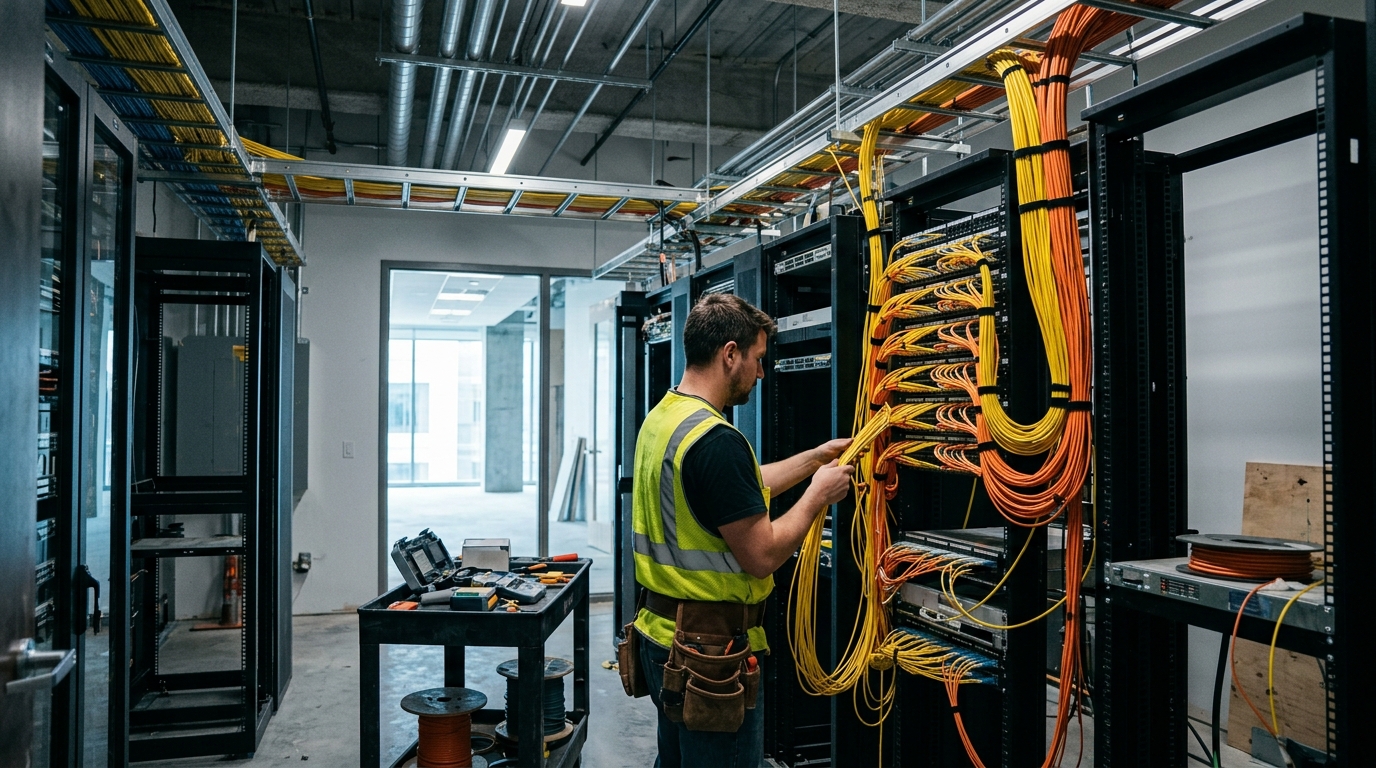
A fiber backbone is the high-speed core connection linking a building's main telecommunications room to remote equipment rooms. Builders choose it because it supports massive data throughput, resists electromagnetic interference, and scales easily for future growth. Superior Communication Services designs these core networks to ensure your new office infrastructure remains fast, secure, and ready for expansion.
The Role of Fiber in Network Architecture
In a modern office environment, network architecture relies on a hierarchical structure. The backbone sits at the top of this hierarchy, connecting the core switch to distribution switches located in remote closets. Fiber optic cabling is the physical medium that carries data between these critical nodes. Unlike horizontal cabling that connects end-user devices, the backbone handles the aggregate traffic for entire floors or wings of a building.
This distinction is vital for performance. When a user in a remote office sends a large file to a server in the main data room, that data travels through the backbone. If the backbone is undersized or uses outdated technology, it becomes a bottleneck that slows down the entire network. By using fiber for this core layer, organizations ensure that the path between major network nodes has sufficient bandwidth to handle peak loads without congestion.
Why Builders Choose Fiber Over Copper
Builders and facility managers select fiber for the backbone due to its superior signal integrity and distance capabilities. Copper cables suffer from signal attenuation and electromagnetic interference (EMI) over long distances. Fiber optic cables transmit data as light, which is immune to EMI and can carry signals over much longer distances without degradation. This makes fiber the only viable option for backbones that span large office spaces or connect separate buildings.
Designing the Fiber Backbone
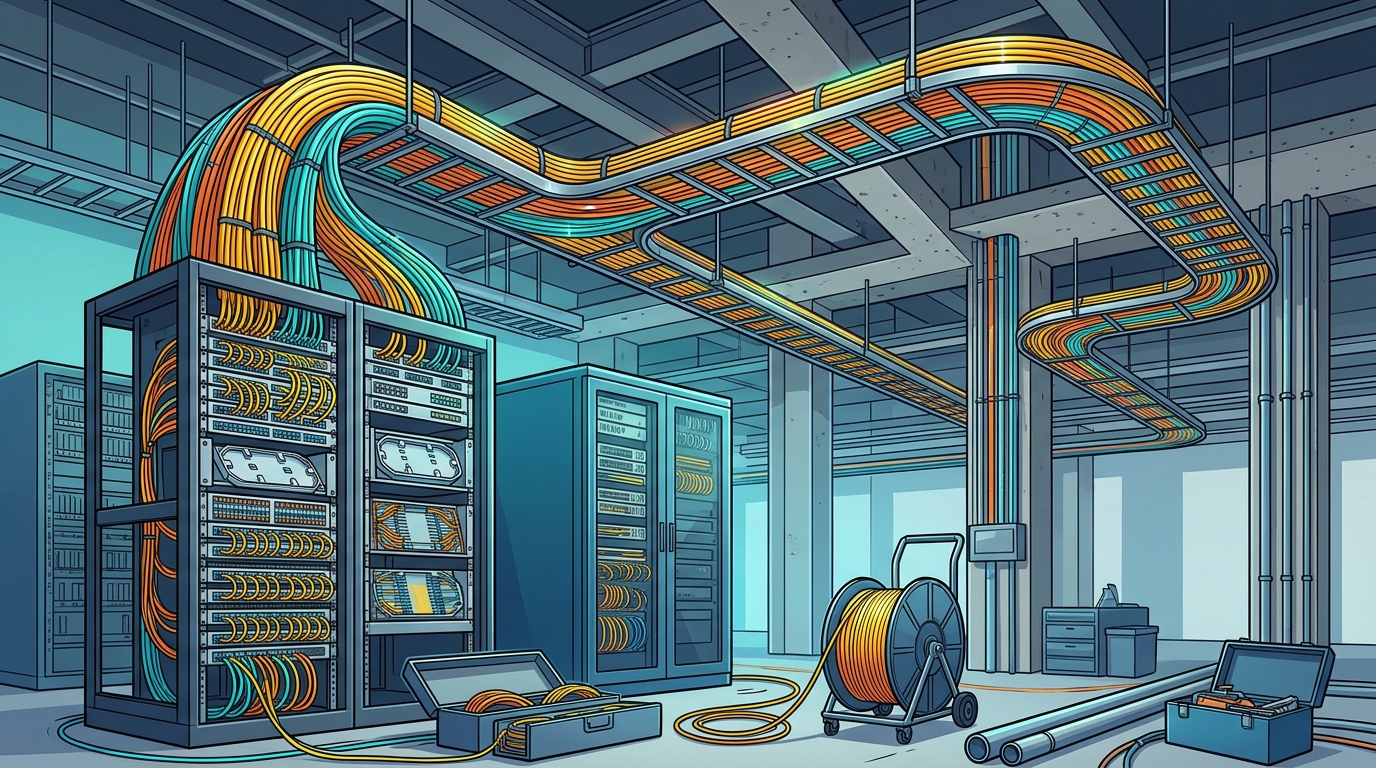
Designing a fiber backbone requires careful planning of the physical path and the logical topology. Engineers must determine the number of fiber strands needed based on current bandwidth requirements and projected growth. Structured cabling is the standardized approach to designing these networks, ensuring that all components work together seamlessly. At Superior Communication Services, our engineers use detailed site surveys to map out the optimal routes for fiber runs, avoiding obstacles and ensuring proper bend radii to prevent signal loss.
The choice between single-mode and multi-mode fiber is a critical decision in this phase. Single-mode fiber is typically used for longer distances and higher bandwidth applications, while multi-mode fiber is often sufficient for shorter intra-building runs. The decision depends on the specific needs of the organization. For example, a law firm with heavy data transfer needs might opt for single-mode fiber to ensure maximum performance, while a smaller retail office might find multi-mode fiber adequate and more cost-effective.
The Implementation Process
Installing a fiber backbone is a precise process that requires certified technicians and specialized tools. The process begins with pulling the fiber cables through conduits or trays, followed by terminating the ends with connectors. Each connection must be tested to ensure it meets industry standards for loss and return loss. Superior Communication Services provides certified technicians who install, configure, and test each component, leaving you with a turnkey solution. This attention to detail ensures that the backbone performs reliably from day one.
Documentation is a crucial part of the implementation. As-built drawings and test reports are provided to the client, creating a permanent record of the network infrastructure. This documentation is invaluable for future maintenance and troubleshooting. It allows IT staff to quickly identify the path of each fiber run and understand the capacity of the backbone. Without proper documentation, even a well-designed network can become difficult to manage over time.
Future-Proofing Your Investment
Maintenance is also simpler with fiber. While fiber is fragile during installation, it is very durable once installed. It does not corrode like copper and is not affected by temperature fluctuations in the same way. Regular preventive maintenance, such as cleaning connectors and monitoring signal levels, ensures that the backbone continues to perform at peak efficiency. This long-term reliability makes fiber a smart investment for any new office network.
Key Takeaways
- Fiber backbone cabling is the core connection linking main and remote telecommunications rooms in a new office network.
- Builders choose fiber for its immunity to interference and ability to carry high bandwidth over long distances.
- Structured cabling standards guide the design of fiber backbones to ensure scalability and performance.
- Single-mode and multi-mode fiber are selected based on distance and bandwidth requirements.
- Certified installation and testing are essential to ensure the backbone meets industry standards.
- Proper documentation of the fiber infrastructure is critical for long-term maintenance and troubleshooting.
- Fiber is a future-proof investment that supports new technologies and reduces the need for re-cabling.
Frequently Asked Questions
What is the main difference between a fiber backbone and horizontal cabling?
A fiber backbone connects the main telecommunications room to remote equipment rooms, handling aggregate traffic for the building. Horizontal cabling connects these remote rooms to individual end-user devices. The backbone requires higher bandwidth and longer distance capabilities, which is why fiber is typically used for this layer.
Why is fiber preferred over copper for the network backbone?
Fiber is preferred because it is immune to electromagnetic interference and can carry signals over much longer distances without degradation. Copper cables suffer from signal loss and interference over long runs, making them unsuitable for backbone applications in large buildings.
How many fiber strands are needed for a new office backbone?
The number of strands depends on the size of the building and the expected bandwidth demand. A small office might require a 12-strand fiber cable, while a large corporate campus might need 48 or 96 strands. An engineer should perform a needs assessment to determine the appropriate capacity.
Can a fiber backbone be upgraded without replacing the cables?
Yes, in many cases. If the initial installation included spare strands, these can be activated to increase capacity. Additionally, new technologies like Wavelength Division Multiplexing (WDM) can increase the bandwidth of existing fiber strands without requiring new physical cabling.
Who should install a fiber backbone in a new office?
A fiber backbone should be installed by certified technicians with experience in structured cabling. These professionals have the specialized tools and training to pull, terminate, and test fiber cables to industry standards. Using unqualified installers can lead to signal loss and network failures.
How does Superior Communication Services approach fiber backbone design?
Superior Communication Services begins with a detailed site survey and needs assessment. Our engineers design a scalable solution that fits your current requirements and future growth plans. We then handle the installation, testing, and documentation, providing a turnkey solution that is ready for immediate use.
Plan Your Fiber Backbone with Superior
Building a new office network requires a solid foundation. A well-designed fiber backbone ensures that your infrastructure can handle today's demands and tomorrow's growth. To plan your visit, contact our team to discuss your fiber cabling needs and get a quote for your project.