
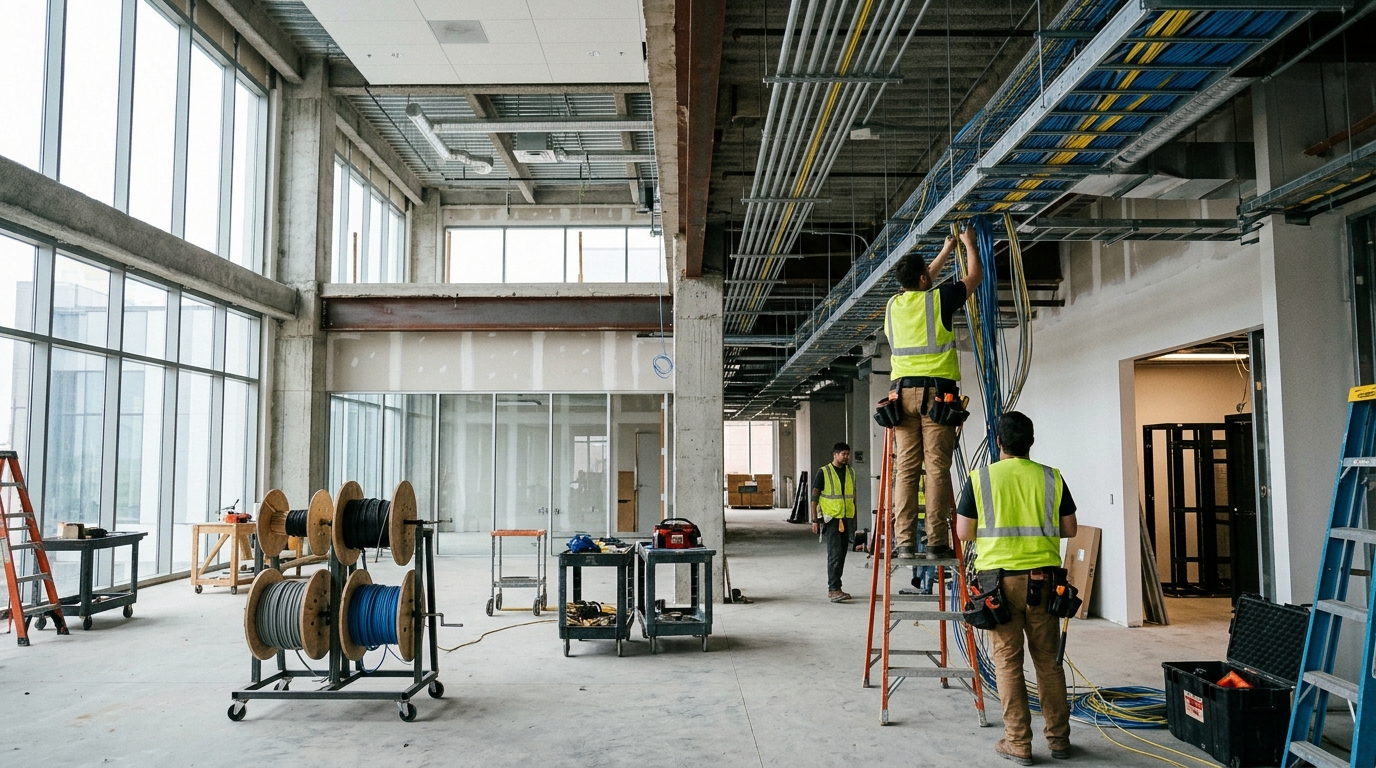
Commercial technology integration is the process of designing, installing, and maintaining the low-voltage infrastructure that powers a modern workplace. Before starting an office buildout, you must align your network, security, and audio visual systems with your physical space and business goals. Superior Communication Services helps organizations navigate this complexity by providing a single point of contact for all technology needs. This approach ensures that your infrastructure is scalable, secure, and ready for future growth from day one.
Planning Your Infrastructure Foundation
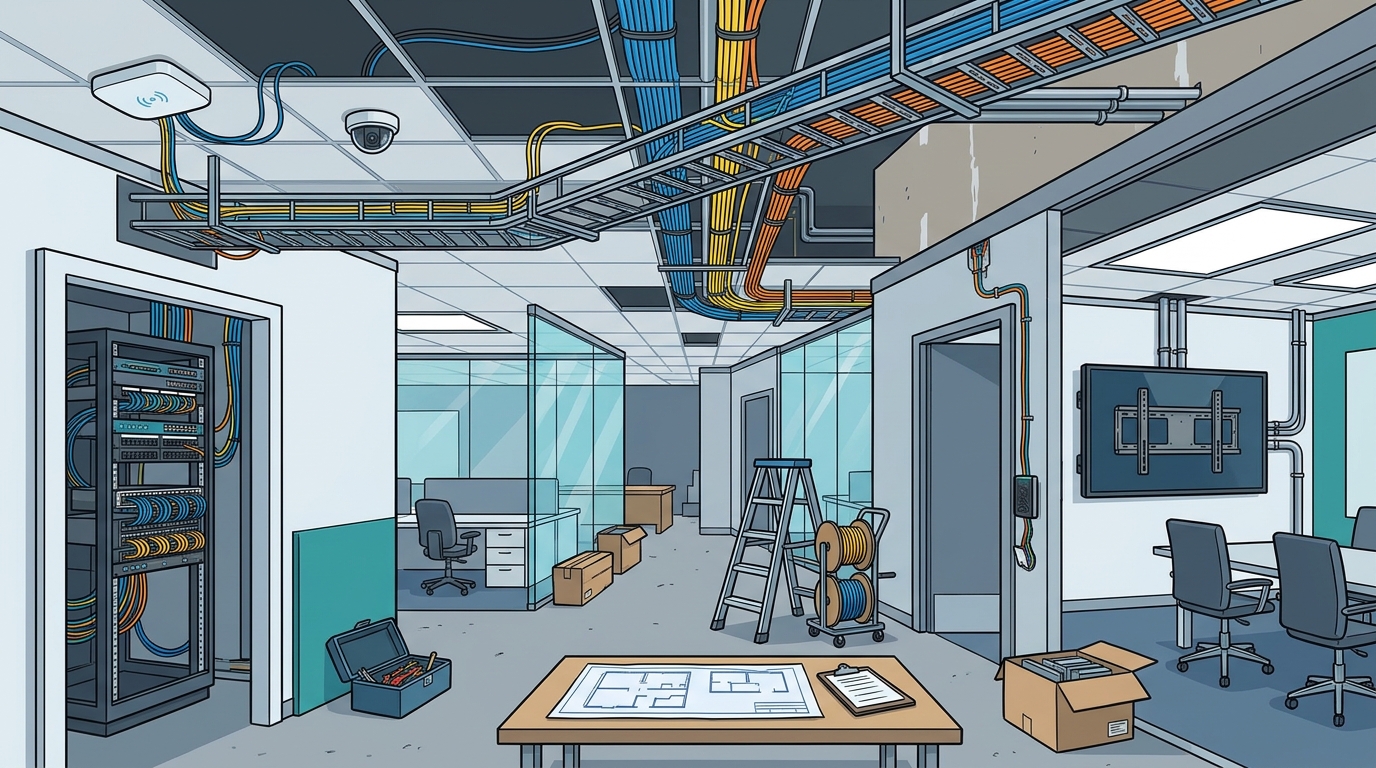
The foundation of any successful office buildout is a robust network infrastructure. Structured cabling is the physical layer that connects all your devices, servers, and security systems. Without a properly designed cabling plan, you risk bottlenecks, slow data transfer, and costly retrofits later. You need to decide between copper and fiber optic solutions based on your bandwidth requirements and future expansion plans.
Designing Security and Access Control
Security is no longer just about locking doors; it is about managing digital and physical access seamlessly. Access control is a system that regulates who can enter specific areas of your facility and when. Integrating this with video surveillance creates a comprehensive safety net for your employees and assets. You must consider how these systems will interact with your existing IT environment to avoid silos.
Consider a corporate office with multiple entry points and sensitive server rooms. A turnkey access control system can restrict entry to authorized personnel only, while video cameras monitor activity in real-time. Access control and IP security solutions should be designed to be scalable, ensuring they remain relevant five to ten years down the road. This long-term perspective prevents the need for frequent and expensive system replacements.
Enhancing Collaboration with Audio Visual
Modern workplaces rely heavily on collaboration, which requires reliable audio visual technology. Audio visual integration is the process of combining audio, video, and data systems to facilitate communication and presentation. From video conferencing rooms to digital signage, these systems must be intuitive and high-performance. Poorly installed AV equipment leads to frustrated employees and wasted meeting time.
For instance, a conference room equipped with a video wall and premium audio must be tested thoroughly before handover. Audio visual engineers design these solutions to fit the specific acoustics and layout of your space. Training is also a crucial aspect of this process. Your team must be able to operate the installed solutions confidently. This ensures that the technology enhances productivity rather than hindering it.
Ensuring Reliable Wireless Coverage
A fast and secure wireless connection is critical for mobile workforces. Wireless network design is the strategic planning of access point placement to ensure maximum coverage and performance. In today's business environment, more Wi-Fi capable devices are being utilized by employees than ever before. This increases the demand for high-speed, secure connections that can handle multiple users simultaneously.
Take a large open office space as an example. Without a comprehensive site survey, you may experience dead zones or slow speeds in certain areas. Wireless engineers use heatmaps to identify the best locations for access points and antenna orientation. This ensures that your entire space is covered effectively. Additionally, cellular coverage solutions like small cells and DAS can be integrated to support mobile devices that rely on carrier networks.
Managing Multi-Site Execution
For organizations with multiple locations, consistency is key. Multi-site project deployment is the management of technology rollouts across various geographic locations to ensure uniform results. This requires experienced project managers who can coordinate with local teams and maintain quality standards. A single point of contact simplifies communication and accountability.
Consider a national rollout of new workstations and security cameras across ten offices. Project deployment teams can manage this complexity by providing local expertise and national coordination. This approach reduces the burden on your internal IT staff. It also ensures that each location receives the same high-quality installation and configuration. This consistency is vital for maintaining operational efficiency across your entire organization.
Key Takeaways
- Start with a solid structured cabling plan to support your network infrastructure.
- Integrate access control and video surveillance for comprehensive physical security.
- Design audio visual systems with user training in mind to maximize adoption.
- Use site surveys to ensure reliable wireless coverage in all areas of your office.
- Choose a single vendor for multi-site projects to ensure consistency and accountability.
- Plan for scalability to avoid costly retrofits in the future.
Frequently Asked Questions
What is the first step in commercial technology integration?
The first step is a needs assessment and site walk-through. This involves meeting with end users to determine their requirements and analyzing the physical space. This ensures that the technology design aligns with your business goals.
How long does an office technology buildout take?
The timeline varies based on the scope and complexity of the project. A single office might take a few weeks, while a multi-site national rollout can take several months. A dedicated project team helps keep the project on schedule.
Do I need a separate vendor for security and network cabling?
No, it is often more efficient to use a single integrator for all low-voltage technologies. This provides a single point of contact and ensures that all systems work together seamlessly. It also simplifies maintenance and support.
What is the role of a project manager in a buildout?
A project manager coordinates all aspects of the installation, from scheduling to quality control. They serve as the primary contact for the client and ensure that the project stays on time and within budget. This role is crucial for minimizing disruption to your daily operations.
How do I ensure my technology is scalable?
Work with designers who have experience in long-term planning. They will recommend solutions that can grow with your business, such as modular cabling and flexible access control systems. This prevents the need for complete system replacements in the future.
What industries benefit most from commercial technology integration?
Industries with high data requirements or strict security needs, such as finance, healthcare, and technology, benefit significantly. However, any organization with multiple locations or a growing workforce can improve efficiency through proper integration.
Start Your Project with Confidence
Starting an office buildout is a significant investment in your business's future. By understanding the key components of commercial technology integration, you can make informed decisions that drive productivity and security. Superior Communication Services offers the expertise and resources to guide you through every step of the process. To discuss your project goals and receive a tailored solution that fits your vision, contact our team.