

Equipment specifications in an AV proposal define the technical capabilities, physical dimensions, and performance metrics of the hardware being installed. Understanding these specs ensures the system meets your operational needs and integrates seamlessly with existing infrastructure. Superior Communication Services helps clients navigate these technical details to avoid costly mismatches and ensure long-term reliability.
The Core Components of AV Hardware Specifications
Display and Projection Metrics
For visual systems, resolution and brightness are the primary drivers of usability. Resolution determines the clarity of the image, while brightness, measured in nits or lumens, dictates visibility in ambient light. A 4K display in a dark conference room requires different brightness specifications than a digital signage screen in a sunlit lobby. Ignoring these metrics leads to washed-out images or unnecessary costs for over-specced hardware.
Audio Performance Indicators
Audio specifications focus on frequency response, signal-to-noise ratio, and maximum sound pressure level. Frequency response indicates the range of pitches the speaker can reproduce, while signal-to-noise ratio measures the clarity of the audio against background hiss. In commercial spaces, understanding these numbers is critical for ensuring speech intelligibility, which is the primary goal of most conference room audio systems.
Why Physical Dimensions and Mounting Matter
Clearance and Ventilation Requirements
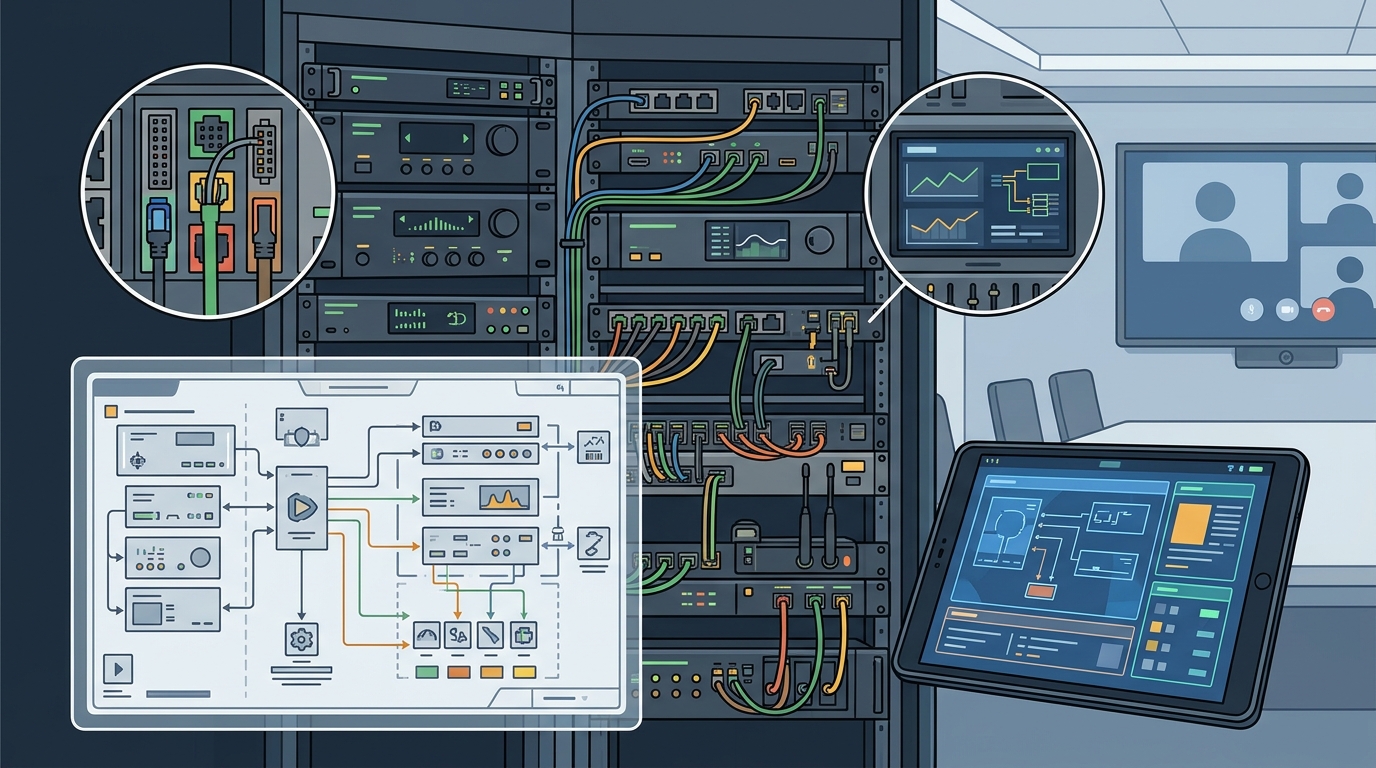
Many AV devices generate heat and require specific clearance for ventilation. If a media player or processor is installed in a tight cabinet without adequate airflow, it will throttle performance or fail prematurely. Specifications often list minimum clearance distances on all sides. Failing to account for these physical constraints during the design phase can result in equipment that overheats and shuts down during critical presentations.
Power Consumption and Load
Power specifications indicate the voltage and amperage required to run the device. In large installations, the cumulative power draw of all AV equipment must be calculated to ensure the local electrical circuit can handle the load. Exceeding the circuit capacity can trip breakers or cause voltage drops that affect system stability. Superior Communication Services engineers calculate these loads during the design phase to ensure electrical compatibility.
Connectivity and Integration Standards
Modern AV systems are not standalone devices; they are nodes in a network. Connectivity specifications define how the equipment communicates with other systems. This includes physical ports like HDMI, DisplayPort, and USB, as well as network protocols like IP-based control and streaming. Understanding these specs ensures that the new AV system can integrate with your existing IT infrastructure and control systems.
Network Bandwidth and Latency
For IP-based AV systems, network specifications are critical. Bandwidth requirements determine how much data the system needs to transmit video and audio streams. Latency specifications indicate the delay between the source and the display. In interactive applications, high latency can make the system unusable. Ensuring your network infrastructure meets these specifications is essential for a smooth user experience.
Control Protocol Compatibility
Environmental and Durability Ratings
Commercial environments are not always controlled. Equipment may be exposed to varying temperatures, humidity, and dust. Environmental specifications, often denoted by IP ratings, indicate the level of protection against ingress of solid and liquid particles. An IP65 rating means the device is dust-tight and protected against water jets. For installations in lobbies, retail spaces, or outdoor areas, these ratings are non-negotiable for long-term reliability.
Operating Temperature Ranges
Each device has a specified operating temperature range. If the ambient temperature in the installation space exceeds this range, the equipment may fail. Server rooms and enclosed cabinets can become hot, so it is crucial to verify that the equipment can handle the expected thermal environment. This is particularly important for processors and media players that generate significant heat.
How Superior Communication Services Validates Specs
At Superior Communication Services, we do not just list equipment in a proposal; we validate that it fits your specific use case. Our engineers review every specification against your site conditions, existing infrastructure, and operational requirements. We ensure that the proposed hardware is not only technically capable but also physically compatible and environmentally suited for your space. This rigorous validation process prevents post-installation issues and ensures a turnkey solution that works from day one.
By understanding what equipment specs really mean, you can make informed decisions and hold your integrator accountable for delivering a system that meets your needs. Whether you are planning a single conference room or a multi-site rollout, accurate specification review is the foundation of a successful AV project.
Key Takeaways
- Resolution and brightness determine visual clarity and visibility in different lighting conditions.
- Audio specs like frequency response and signal-to-noise ratio impact speech intelligibility.
- Physical dimensions and weight must be checked against mounting and structural capabilities.
- Power consumption must be calculated to ensure electrical circuit compatibility.
- Connectivity and control protocols ensure seamless integration with existing IT systems.
- Environmental ratings like IP codes indicate durability in non-controlled commercial spaces.
Frequently Asked Questions
What is the most important spec for a conference room display?
Resolution and brightness are the most critical specs for conference room displays. Resolution ensures clarity for shared screens, while brightness ensures visibility in rooms with ambient light. These two factors directly impact the usability of the display for presentations and video calls.
How do I know if the audio system will be loud enough?
Check the maximum sound pressure level (SPL) specification. This number indicates the loudest the speaker can get. Compare this to the size of the room and the number of occupants. A larger room requires a higher SPL to ensure everyone can hear clearly.
Why are physical dimensions important in an AV proposal?
Physical dimensions ensure the equipment fits the designated space and can be safely mounted. They also determine the clearance needed for ventilation and access for maintenance. Ignoring these specs can lead to installation delays or the need for custom modifications.
What does an IP rating mean for AV equipment?
An IP rating indicates the level of protection against dust and water. The first number refers to solid particle protection, and the second refers to liquid protection. For example, IP65 means dust-tight and protected against water jets. This is important for equipment installed in non-controlled environments.
How does power consumption affect the installation?
Power consumption determines the electrical load required to run the equipment. If the total load exceeds the capacity of the local circuit, it can cause breakers to trip or voltage drops. Calculating the total power draw is essential for ensuring a stable and safe installation.
Can I use any control system with any AV equipment?
Next Steps for Your AV Project
Understanding equipment specifications is the first step toward a successful AV installation. By reviewing these technical details, you can ensure that the proposed system meets your operational needs and integrates seamlessly with your existing infrastructure. If you are planning an AV project, contact Superior Communication Services to discuss your requirements and receive a detailed proposal that addresses every technical aspect of your installation.